
Introduction
Peptides are short chains of amino acids — the same building blocks that make up proteins. They occur naturally throughout the body and serve as signaling molecules that regulate a wide range of biological functions.
Interest in peptides has grown dramatically in recent years, particularly in the research and wellness communities.
Understanding what peptides do begins with understanding how they communicate with cells — and why that matters for ongoing scientific study.
How Peptides Work in the Body
Peptides act as messengers. When they bind to specific receptors on the surface of cells, they trigger responses that can influence everything from hormone production to tissue repair.
Different peptides have different targets. Some bind to growth hormone receptors, others interact with immune pathways, and some influence inflammatory signaling.
Because of this specificity, researchers study peptides as highly targeted compounds — more precise than many broader-acting substances.
Areas of Active Research
Current peptide research focuses on a wide range of potential applications. Some of the most studied areas include:
- Muscle growth and body composition (GHRPs and IGF-1 analogs)
- Tissue repair and recovery (BPC-157, TB-500)
- Metabolic regulation and weight management (GLP-1 analogs)
- Skin health and collagen production
- Anti-aging and cellular longevity (Epithalon)
- Immune system modulation
It is important to note that most peptides available for purchase are sold for research purposes only and are not approved as medical treatments.
Why Researchers Are Interested
One of the key reasons peptides attract scientific attention is their selectivity. Because they target specific receptors, researchers can study their effects on isolated biological pathways.
Peptides are also naturally occurring compounds, which means the body already has mechanisms to process them. Many break down into amino acids after use, reducing the likelihood of accumulation in tissues.
This profile makes them an interesting subject for studies in regenerative medicine, metabolic research, and performance science.
What the Research Currently Show
Research into peptides is still evolving. Many compounds show promising results in preclinical (animal) studies, but human clinical data is limited for most research peptides currently available.
Some peptides, like semaglutide, have completed rigorous clinical trials. Others remain in earlier stages of investigation.
As with all scientific research, results vary by compound, dosage, subject, and study design. Responsible use of research peptides requires a thorough understanding of the available literature.
Conclusion
Peptides are among the most versatile and actively researched classes of biological compounds available today. Their ability to interact selectively with cell receptors makes them valuable tools in laboratory settings.
Whether you are a researcher, a clinician, or simply someone curious about what all the interest is about, the science behind peptides is worth exploring carefully and critically.
Ready to Explore Our Research-Grade Peptides?
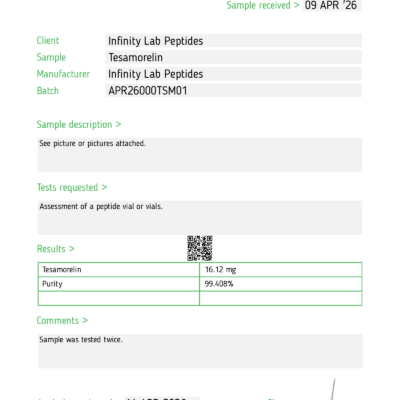
Infinity Lab Peptides supplies high-purity, lab-tested compounds with full Certificates of Analysis.
Trusted by researchers across Canada.