
The question of which are the best peptides for fat loss research in Canada is one of the most active areas of metabolic science today. Across GLP-1 pathways, growth hormone secretagogues, and triple-receptor agonists, the landscape of metabolic peptide research has expanded dramatically in the last three years. This guide organizes the most researched compounds for Canadian scientists working in this space — what they target, what the data shows, and what to look for when sourcing in Canada.
1. How Peptides Influence Fat Loss Mechanisms in Research Models
Before comparing specific compounds, it’s useful to understand the primary pathways researchers study in relation to fat metabolism. Most metabolic peptides under active investigation target one or more of these mechanisms:
- GLP-1 receptor agonism: Glucagon-like peptide-1 signaling affects appetite regulation, gastric emptying, and insulin secretion — a heavily validated pathway for metabolic research
- GIP receptor agonism: Glucose-dependent insulinotropic polypeptide signaling influences fat storage and insulin response — newer research is exploring its combination with GLP-1 agonism
- Glucagon receptor agonism: Glucagon promotes energy expenditure and hepatic glucose output — adding this pathway appears to enhance thermogenic effects in preclinical models
- Growth hormone secretagogue pathways: Compounds that stimulate GH release can influence fat oxidation and body composition through IGF-1 signaling
- Melanocortin pathways: MC4R agonism has been studied for appetite regulation and energy homeostasis in rodent and primate models
2. Retatrutide: The Leading Triple-Agonist in Current Metabolic Research
Among compounds currently generating the most research interest, retatrutide stands apart for its simultaneous GLP-1, GIP, and glucagon receptor activity.
Why Researchers Prioritize Retatrutide
- Phase 2 human trial data published in 2023 showed body weight reductions that exceeded those of single and dual-agonist comparators in similar trial designs
- The glucagon receptor component appears to drive increased energy expenditure — a mechanism not present in GLP-1-only compounds like semaglutide
- Retatrutide has also shown effects on lipid profiles and blood pressure markers in early clinical data, suggesting broader metabolic signaling
- Phase 3 trials are underway as of 2025, making this the highest-activity compound in the metabolic peptide research pipeline
- Canadian researchers can source verified retatrutide from compliant domestic suppliers with third-party COA documentation
3. Semaglutide: The GLP-1 Standard for Metabolic Research
Semaglutide is the most extensively studied GLP-1 receptor agonist in the current research literature, with both the SUSTAIN and STEP trial series generating enormous amounts of published data.
Semaglutide’s Role in Canadian Research
- As an approved pharmaceutical (Ozempic, Wegovy), semaglutide has the largest human clinical trial dataset of any compound in this category
- For research comparison purposes, semaglutide serves as a validated reference compound — useful for benchmarking novel metabolic peptides against known GLP-1 agonism effects
- Research-grade semaglutide for in-vitro use is distinct from pharmaceutical semaglutide — sourcing must be through compliant research peptide channels with appropriate purity documentation
- Its well-characterized side effect and tolerability profile in humans makes it a useful methodological anchor for comparative metabolic studies
4. CJC-1295 and Ipamorelin: Growth Hormone Pathway Research
While not GLP-1 agonists, CJC-1295 and Ipamorelin represent a distinct class of research compounds frequently studied in the context of body composition and fat oxidation through growth hormone signaling.
What the Research Shows
- CJC-1295 is a GHRH (growth hormone-releasing hormone) analogue — it stimulates pulsatile GH release in research models and has been studied for its effects on lean mass and fat oxidation ratios
- Ipamorelin is a selective GHRP (growth hormone-releasing peptide) — it stimulates GH secretion through ghrelin receptor activation with a cleaner selectivity profile than older GHRPs
- These compounds are frequently studied together because their complementary mechanisms produce additive GH pulse effects in animal models
- Research interest centers on GH-mediated lipolysis — the mobilization of stored fatty acids — rather than direct receptor-mediated appetite suppression
- Canadian researchers should verify WADA classification if the research context involves any athletic performance applications
5. AOD-9604: The Lipolytic Fragment
AOD-9604 is a synthetic fragment of human growth hormone (hGH 176-191) studied specifically for its influence on lipolytic activity without the full anabolic effects of intact HGH.
AOD-9604 Research Profile
- Preclinical data showed stimulation of fat breakdown and inhibition of lipogenesis (fat formation) in animal models without observable effects on insulin sensitivity or IGF-1 levels
- A Phase 2b human trial was conducted in the early 2000s — results were modest, leading to discontinuation of pharmaceutical development, but the compound remains a research reference point for lipolysis pathway studies
- Its specificity for metabolic effects without growth-promoting activity makes it a useful tool for isolating lipolytic signaling in research designs
- Available from Canadian research peptide suppliers with appropriate purity verification
6. Tesamorelin: The Only Approved GH-Releasing Peptide in North America
Tesamorelin holds a unique status — it is the only GHRH analogue approved by both the FDA (United States) and Health Canada, specifically for the treatment of HIV-associated lipodystrophy.
Tesamorelin’s Significance for Canadian Researchers
- Its approved status means an extensive human clinical trial dataset exists — valuable for research teams studying visceral adipose tissue (VAT) reduction mechanisms
- Clinical data has shown significant reductions in visceral fat specifically, with minimal effects on subcutaneous fat — a mechanistic distinction of research interest
- Research teams studying GH-mediated fat metabolism have a validated, human-studied reference compound available through both pharmaceutical and research channels
- Its regulatory history in Canada provides a model for how GHRH-pathway compounds can progress from research to pharmaceutical approval
7. How to Choose a Canadian Supplier for Metabolic Peptide Research
Regardless of which compounds your research prioritizes, sourcing quality is the foundation of reproducible results. These are the non-negotiable standards for metabolic peptide procurement in Canada.
Quality Criteria for Canadian Metabolic Peptide Sourcing
- Minimum 98% purity verified by HPLC chromatography with documented peak area percentage
- Mass spectrometry identity confirmation — especially critical for distinguishing similar peptide sequences (semaglutide, retatrutide, and tirzepatide have distinct molecular weights that MS can differentiate)
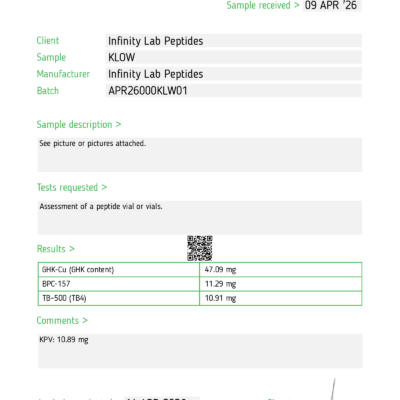
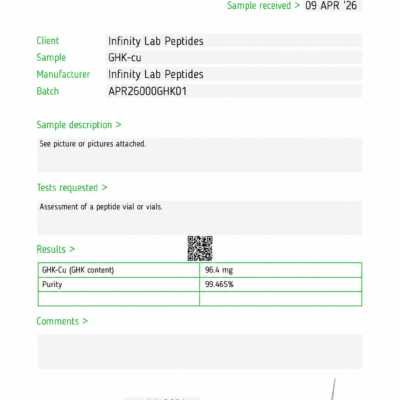
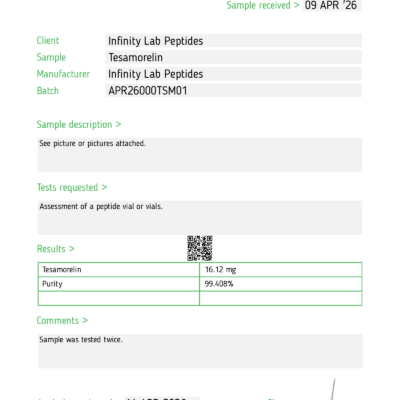
- Batch-specific, dated COAs from an independent laboratory — not generic or supplier-internal documents
- Compliant “research use only” labeling and absence of therapeutic health claims in product descriptions
- Domestic Canadian shipping with verifiable cold-chain handling protocols
Source Verified Metabolic Research Peptides in Canada
Infinity Lab Peptides carries research-grade metabolic peptides including retatrutide, semaglutide, CJC-1295, ipamorelin, and more — all with batch-specific COA documentation and compliant Canadian labeling.
Browse the full Canadian research peptide catalog →
Need documentation for a specific compound or have questions about your research sourcing requirements? Contact our team — we work directly with researchers to provide the documentation they need.
Frequently Asked Questions: Metabolic Peptide Research in Canada
Which peptide has the most clinical research supporting metabolic effects? Semaglutide has the largest published human clinical trial dataset for metabolic effects. Retatrutide has the most active current pipeline, with Phase 3 trials ongoing as of 2025 and Phase 2 data already published in major journals.
Can Canadian researchers legally buy retatrutide? Yes, for legitimate in-vitro and laboratory research purposes. Retatrutide is not an approved drug in Canada, so it cannot be sold for human use, but research procurement from compliant domestic suppliers is permissible.
What’s the difference between a GLP-1 agonist and a triple agonist? A GLP-1 agonist (like semaglutide) targets only the GLP-1 receptor. A dual agonist (like tirzepatide) adds GIP receptor activation. A triple agonist (like retatrutide) additionally activates the glucagon receptor, adding energy expenditure effects to the appetite and insulin signaling mechanisms.
Do I need to be affiliated with an institution to purchase research peptides in Canada? Institutional affiliation is not a universal legal requirement for research peptide procurement in Canada. However, maintaining documentation of research purpose is a best practice, and some suppliers may request researcher credentials for certain compounds.