
The semaglutide vs retatrutide comparison has become one of the most discussed topics in metabolic research over the past two years. Both are peptide-based compounds studied for their effects on metabolic signaling — but their mechanisms, receptor targets, and clinical data profiles are meaningfully different. This guide breaks down what researchers need to know when designing studies, selecting reference compounds, or evaluating the literature.
1. Receptor Targets: The Core Difference
The most fundamental distinction in the semaglutide vs retatrutide comparison is the number and type of receptors each compound engages.
Understanding the Receptor Profile Difference
- Semaglutide: Mono-agonist — selectively targets only the GLP-1 (glucagon-like peptide-1) receptor. All of semaglutide’s observed metabolic effects flow from this single receptor pathway
- Retatrutide: Triple-agonist — simultaneously engages GLP-1, GIP (glucose-dependent insulinotropic polypeptide), and glucagon receptors. This broader receptor engagement is the source of its differentiated research profile
- The addition of GIP receptor activity to GLP-1 agonism (as seen in tirzepatide, a dual-agonist) was already shown to produce additive metabolic effects — retatrutide adds a third mechanism on top of this
- The glucagon receptor component specifically drives increased energy expenditure through hepatic glucose output and thermogenic signaling — an effect absent from both semaglutide and tirzepatide
2. Clinical Trial Data: What Each Compound Has Shown
Both compounds have human clinical trial data, though their development timelines differ substantially.
Comparing the Evidence Base
- Semaglutide has completed multiple Phase 3 programs — the SUSTAIN series (type 2 diabetes) and the STEP series (obesity/overweight) — generating extensive, peer-reviewed human data across thousands of participants
- Semaglutide (Ozempic, Wegovy, Rybelsus) is approved by Health Canada and the FDA, giving it the most thoroughly documented safety and efficacy profile of any compound in this category
- Retatrutide completed Phase 2 trials with data published in the New England Journal of Medicine in 2023, showing weight reductions that exceeded those observed in comparable semaglutide and tirzepatide Phase 2 trials
- Retatrutide Phase 3 trials are active as of 2025 — it remains an investigational compound, meaning its full human data profile is still being established
- Researchers using retatrutide are working with a compound earlier in the clinical pipeline than semaglutide — this is relevant for study design and data interpretation
3. Metabolic Mechanisms: Three Pathways vs One
Understanding the distinct biological mechanisms helps researchers select the right compound for their study design.
How Each Compound Works at the Cellular Level
- GLP-1 pathway (both compounds): Increases insulin secretion in a glucose-dependent manner, suppresses glucagon release, slows gastric emptying, and activates hypothalamic satiety signaling — this pathway drives appetite suppression effects observed with both compounds
- GIP pathway (retatrutide only): Potentiates insulin secretion and has been shown to complement GLP-1 signaling for enhanced overall metabolic response — GIP receptor agonism also appears to reduce GI side effects associated with pure GLP-1 agonism in some models
- Glucagon pathway (retatrutide only): Increases hepatic glucose production and stimulates thermogenesis — counterintuitively, glucagon co-agonism appears to enhance the net metabolic effect of GLP-1/GIP activation rather than opposing it in the triple-agonist context
- The glucagon component is why retatrutide’s Phase 2 data showed greater effects than might be expected from GLP-1/GIP dual agonism alone
4. Side Effect Profiles in Research: What the Data Suggests
Side effect comparison between semaglutide and retatrutide is a critical research consideration, particularly for study design and participant monitoring.
Navigating the Safety Profile Differences
- Semaglutide’s established profile: Nausea, vomiting, and gastrointestinal discomfort are the most commonly reported adverse effects in clinical trials — these are class effects of GLP-1 agonism and are well-characterized across the literature
- Retatrutide’s emerging profile: Phase 2 data showed a similar GI side effect pattern — nausea was the most frequently reported adverse event — with generally manageable tolerability at the studied doses
- The GIP receptor component of retatrutide has been theorized to attenuate some GI side effects relative to pure GLP-1 agonists, though this hypothesis requires further investigation in larger trials
- Heart rate increases were observed with retatrutide in Phase 2 data — a finding that is being studied in ongoing Phase 3 monitoring
- Because semaglutide has years of post-approval real-world data, researchers have significantly more information on rare adverse events than is currently available for retatrutide
5. Molecular Structure and Stability: Implications for Research Handling
Structural Differences That Matter for Lab Protocols
- Semaglutide is a GLP-1 analogue with a C18 fatty acid chain modification — this modification enables albumin binding, which is responsible for its long plasma half-life (~168 hours). It is highly stable in lyophilized form
- Retatrutide (LY3437943) is a synthetic peptide engineered for multi-receptor engagement — its molecular complexity requires rigorous purity verification since structural analogues exist that may have distinct receptor binding profiles
- For both compounds, mass spectrometry verification is essential to confirm molecular identity — HPLC alone confirms purity but cannot distinguish between structurally similar peptides
- Storage protocols are similar for both in lyophilized form: -20°C sealed from light and moisture; once reconstituted, 2–8°C with use within 28–30 days
6. Research Applications: When to Choose Each Compound
Selecting the Right Compound for Your Study Design
- Choose semaglutide as your reference compound when: you need a well-validated GLP-1 agonist with extensive comparative data, you are benchmarking against approved pharmaceutical standards, or your research requires comparison to known human clinical trial outcomes
- Choose retatrutide when: your research specifically examines multi-receptor agonism, you are investigating the additive effects of glucagon receptor engagement on GLP-1/GIP pathways, or you are contributing to the emerging literature on triple-agonist mechanism research
- Both compounds can be used in combination research designs — for example, studying the incremental contribution of glucagon receptor agonism by comparing dual-agonist controls to triple-agonist experimental conditions
- For Canadian researchers, both are available as research-grade compounds from compliant domestic suppliers with verified COA documentation
7. Sourcing Semaglutide and Retatrutide in Canada: Key Differences
Because semaglutide is an approved drug in Canada, it occupies a different sourcing context than retatrutide.
What Canadian Researchers Need to Know About Procurement
- Research-grade semaglutide for in-vitro laboratory use is available from Canadian peptide research suppliers — it is distinct from pharmaceutical semaglutide and must not be confused with or substituted for approved drug product
- Retatrutide is a non-approved compound in Canada available exclusively through research channels — it has no pharmaceutical supply pathway currently and is sourced only through research peptide suppliers
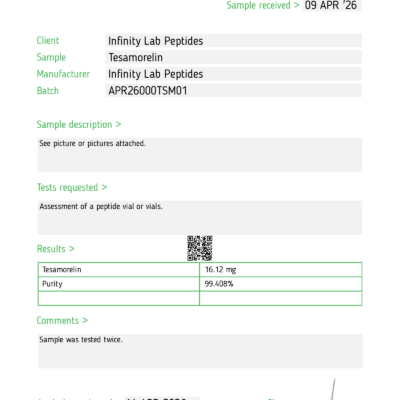
- Both require suppliers who provide batch-specific COA documentation with HPLC ≥98% purity and mass spectrometry identity confirmation
- Both must be labeled “for research use only” without any therapeutic health claims from the supplier
Source Semaglutide and Retatrutide for Canadian Research
nfinity Lab Peptides carries verified research-grade semaglutide and retatrutide for Canadian research professionals. Both products include batch-specific third-party COA documentation, are labeled in compliance with Health Canada guidelines, and ship domestically with cold-chain handling.
Browse our full catalog of verified Canadian research peptides →
Need to review specific COA documentation or have questions about compound selection for your research design? Contact our research support team — we respond within one business day.
Frequently Asked Questions: Semaglutide vs Retatrutide
Is retatrutide more effective than semaglutide?
Phase 2 trial data for retatrutide showed greater weight reductions than were observed in comparable Phase 2 semaglutide studies. However, retatrutide is still in Phase 3 trials — direct head-to-head comparative trials between the two compounds have not yet been published. Researchers should interpret interim comparisons with appropriate caution.
What makes retatrutide different from tirzepatide?
Tirzepatide (Mounjaro) is a dual GLP-1/GIP agonist. Retatrutide adds glucagon receptor agonism as a third mechanism, which appears to drive additional energy expenditure effects beyond what tirzepatide achieves through GLP-1/GIP alone.
Can I buy both semaglutide and retatrutide in Canada for research?
Yes. Research-grade versions of both compounds are available from compliant Canadian suppliers for in-vitro and laboratory research purposes. Neither should be sourced for human administration outside of a properly authorized clinical trial context.
How do I confirm I received the correct peptide when ordering retatrutide vs semaglutide?
Mass spectrometry (MS) verification is essential — the two compounds have distinct molecular weights that MS can definitively distinguish. HPLC purity testing alone cannot confirm compound identity, only purity. Always request and review the MS data in your COA before use.