
Retatrutide Canada searches have surged dramatically over the past year, and for good reason — this triple-receptor agonist peptide is among the most studied research compounds in metabolic science today. If you’re a licensed researcher or scientific professional looking for accurate, up-to-date information on retatrutide sourcing in Canada, this guide covers everything you need to know.
1. What Is Retatrutide and Why Are Researchers Interested?
Retatrutide (also designated LY3437943) is a synthetic peptide that simultaneously activates three metabolic receptors: GLP-1 (glucagon-like peptide-1), GIP (glucose-dependent insulinotropic polypeptide), and glucagon. This triple-agonist mechanism distinguishes it from earlier-generation peptides like semaglutide, which targets only GLP-1.
What Does the Research Show?
- Phase 2 clinical trials published in the New England Journal of Medicine (2023) reported significant body weight reductions in study participants over 48 weeks
- Researchers noted simultaneous improvements in lipid panels, fasting glucose, and blood pressure markers in preclinical and early clinical data
- The glucagon component appears to enhance energy expenditure, a differentiated mechanism not present in dual-agonist peptides
- Current Phase 3 trials are ongoing as of 2025, making this a highly active area of metabolic research
Why This Matters for Canadian Researchers
- Canada has a robust research science community with legitimate demand for high-purity reference peptides
- Strict supplier quality standards in Canada create a higher baseline expectation for certificate of analysis (COA) documentation
- Sourcing domestically reduces shipping delays, customs complications, and cold-chain integrity risks
2. Understanding Retatrutide’s Legal Status for Research Purposes in Canada
Retatrutide is not an approved drug in Canada. It has not received a Notice of Compliance (NOC) from Health Canada as of 2025. This means it is not available through retail pharmacies and cannot be marketed for human consumption.
What Researchers Need to Know About Compliance
- Research peptides in Canada occupy a specific regulatory space — they may be legally purchased and possessed for legitimate in-vitro or laboratory research purposes
- Reputable Canadian suppliers clearly label products as “for research use only” and do not make therapeutic claims
- Researchers should maintain documentation of intended use and institutional affiliation where applicable
- Always verify that a supplier complies with Health Canada’s guidelines on the sale of non-approved substances
3. What to Look for in a Canadian Retatrutide Supplier
Supplier quality varies enormously in the Canadian peptide market. These are the non-negotiable standards to hold any supplier to before placing an order.
Quality Benchmarks Every Supplier Should Meet
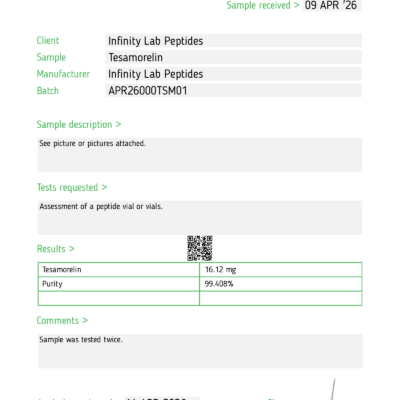
- Third-party Certificate of Analysis (COA): Every batch should come with an independently verified COA showing purity levels — look for 98%+ purity on HPLC testing
- Mass Spectrometry (MS) verification: Confirms the correct molecular weight and peptide identity, not just purity
- Batch-specific documentation: Avoid suppliers who show one COA for all products or don’t date their lab results
- Cold-chain shipping: Lyophilized peptides are shelf-stable, but proper temperature controls during transit preserve integrity
- Canadian address and customer support: Domestic suppliers are accountable under Canadian consumer protection standards
- Clear “research use only” labeling: This is a regulatory compliance signal, not a formality
4. Retatrutide Storage and Handling for Research Labs
Proper handling is essential to maintaining peptide integrity between receipt and use.
Best Practices for Retatrutide Handling
- Store lyophilized (freeze-dried) retatrutide at -20°C in a sealed container away from moisture and light
- Once reconstituted with bacteriostatic water, store at 2–8°C and use within 28–30 days
- Avoid repeated freeze-thaw cycles — aliquot into single-use volumes where possible
- Use low-binding vials or syringes to minimize peptide adhesion to container walls
- Record lot numbers, reconstitution dates, and storage conditions in your research log
5. Retatrutide vs. Other Research Peptides: How It Compares
Canadian researchers often evaluate retatrutide alongside other metabolic peptides. Here’s how the compound stacks up against common alternatives in a research context.
Research Profile Comparison
- Retatrutide vs. Semaglutide: Semaglutide is a single GLP-1 agonist; retatrutide adds GIP and glucagon pathways, resulting in a broader metabolic profile in early studies
- Retatrutide vs. Tirzepatide: Tirzepatide is a dual GLP-1/GIP agonist; retatrutide’s addition of glucagon receptor activation is the key differentiator
- Retatrutide vs. BPC-157: Entirely different mechanisms — BPC-157 is studied primarily for tissue repair signaling, while retatrutide focuses on metabolic pathways
6. Common Mistakes Researchers Make When Sourcing Retatrutide in Canada
How to Avoid Them
- Choosing based on price alone: Low-cost peptides frequently have unverified purity — always cross-reference COA data with the peptide’s expected molecular weight
- Ordering from overseas suppliers to save money: Customs holds, improper cold-chain handling during international transit, and import complications can compromise sample integrity
- Skipping mass spectrometry verification: HPLC alone confirms purity but not identity — MS verification is the gold standard for confirming you received what you ordered
- Not reviewing supplier recall history: Health Canada publishes product recall notices — check these before placing an order with any supplier
7. Why Retatrutide Canada Research Is Accelerating in 2025
Retatrutide Canada interest is at an all-time high heading into 2025’s research season. The compound’s unique triple-agonist profile, combined with Phase 3 trial progress, has made it a reference point for metabolic disease research globally. Canadian researchers are well-positioned to contribute to this body of knowledge — provided they source from verifiable, compliant domestic suppliers.
Ready to Source Research-Grade Retatrutide in Canada?
Infinity Lab Peptides supplies verified, COA-backed retatrutide to Canadian research professionals. Every batch is third-party tested for purity and identity, shipped domestically, and labeled in full compliance with Health Canada guidelines.
Browse our retatrutide inventory →
Questions about purity documentation, shipping, or peptide specifications? Contact our team — we respond to all research inquiries within one business day.
Frequently Asked Questions About Retatrutide in Canada
Is retatrutide legal to buy in Canada? Retatrutide may be purchased for legitimate laboratory and in-vitro research purposes. It is not approved for human use and cannot be sold as a therapeutic agent in Canada.
What purity level should research-grade retatrutide have? Research-grade peptides should have a minimum 98% purity as verified by HPLC, with mass spectrometry confirmation of molecular identity.
How long does retatrutide last after reconstitution? Once reconstituted with bacteriostatic water and stored at 2–8°C, retatrutide is generally stable for 28–30 days. Lyophilized powder stored at -20°C is stable for up to 24 months.
Can I order retatrutide from a Canadian supplier online? Yes. Compliant Canadian suppliers like Infinity Lab Peptides ship domestically. Online ordering with COA documentation review is the standard process for research procurement.