Introduction
One of the most common misconceptions in the world of research compounds is that peptides and steroids are the same thing. They are not.
Both are studied for their effects on body composition and performance, but they belong to entirely different chemical classes and work through distinct biological mechanisms.
Understanding the difference matters — both scientifically and from a regulatory standpoint.
What Are Steroids?
Steroids are a class of lipid compounds characterized by a specific four-ring carbon structure. In the context most people are familiar with, “steroids” typically refers to anabolic-androgenic steroids (AAS) — synthetic derivatives of testosterone.
Anabolic steroids work primarily by binding to androgen receptors inside cells, entering the cell nucleus, and directly influencing gene expression. This can lead to significant changes in muscle protein synthesis and other androgenic effects.
Anabolic steroids are controlled substances in many countries, including Canada, due to their potential for misuse and well-documented side effects.
What Are Peptides?
Peptides are short chains of amino acids linked by peptide bonds. Unlike steroids, they are not lipid-based — they are protein-based molecules that the body naturally produces.
Peptides work by binding to receptors on the cell surface rather than entering the cell nucleus directly. They act more like signaling messengers that trigger downstream biological responses.
This fundamental structural and mechanistic difference means that peptides and steroids should never be considered equivalent compounds.
Key Differences Side by Side
The main distinctions between peptides and steroids include:
- Chemical structure: Steroids are lipid-based (4-ring carbon). Peptides are amino acid chains.
- Mechanism: Steroids act inside the cell nucleus. Peptides bind to surface receptors.
- Natural occurrence: Many peptides are produced naturally by the body. Anabolic steroids are synthetic hormones.
- Legal status: Anabolic steroids are scheduled in most countries. Research peptides occupy a different regulatory category.
- Side effect profile: Anabolic steroids carry well-documented androgenic side effects. Peptide profiles differ significantly by compound.
Why the Confusion Exists
The confusion often stems from the fact that both peptides and steroids are discussed in fitness and performance communities in the context of body composition goals.
Some peptides — particularly growth hormone secretagogues — can stimulate the release of growth hormone, which is also an anabolic hormone. This creates a surface-level association.
However, the mechanism, structure, and regulatory status of peptides are fundamentally different from anabolic steroids.
Conclusion
Peptides are not steroids. They are structurally distinct, mechanistically different, and regulated differently. For researchers exploring peptide compounds, understanding this distinction is foundational.
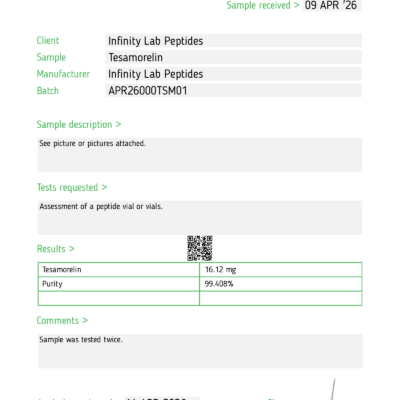
Infinity Lab Peptides supplies research-grade peptides with full purity documentation — not anabolic steroids or any controlled substance.
Disclaimer: All products offered by Infinity Lab Peptides are intended for research and laboratory use only. This content is for informational purposes only and does not constitute medical or legal advice.
Research-Grade Peptides. Lab-Verified Purity.
Every product from Infinity Lab Peptides comes with a Certificate of Analysis so you can research with confidence. Shipped across Canada.