
Free Shipping Bar Attributes


Out of stock
BPC-157 10 mg
$46.99
BPC-157 10 mg research product supplied in vial format for recovery studies.

Estimated delivery: 1–2 business days across Canada.

Free shipping : On all orders over $300.
Guarantee Safe Checkout:


Description
Description
BPC-157 10 mg is supplied as a research-grade vial option with 10 mg for controlled laboratory handling and product documentation. This listing is positioned for recovery research and is intended for qualified research, analytical review, and inventory use only.
The description, strength, and format are kept clear so researchers can evaluate the BPC-157 10 mg listing quickly when reviewing research peptide options in Canada.
- Strength: 10 mg
- Format: Vial
- Research category: recovery research
- Use: Laboratory research and analytical applications only
Research use only: This product is not intended for human consumption, medical use, diagnostic use, or therapeutic use. Researchers should review all available product documentation and follow appropriate laboratory handling practices.
BPC-157 Canada: Research Overview
BPC-157 Canada research supply from Infinity Lab Peptides comes as a 10mg lyophilized vial for laboratory and analytical work. BPC-157 (also written BPC 157 or BPC157) is a synthetic pentadecapeptide, a 15-amino-acid partial sequence of a “body protection compound” first described in gastric juice (PMID 21030672). It has been studied for three decades, almost entirely in animal and cell models, and it is one of the most searched research peptides in Canada.
Identity and Specifications
- Name: BPC-157 (synonyms: BPC 157, PL 14736, bepecin)
- Sequence: Gly-Glu-Pro-Pro-Pro-Gly-Lys-Pro-Ala-Asp-Asp-Ala-Gly-Leu-Val (GEPPPGKPADDAGLV)
- Molecular formula: C62H98N16O22
- Molecular weight: about 1,419.5 g/mol
- CAS: 137525-51-0
- Identity source: PubChem CID 9941957
- Strength on this listing: 10mg per vial, lyophilized
What the Published Research Covers
The BPC-157 literature is broad but mostly preclinical. These are the main research threads, each with the model that was used.
Tendon and fibroblast models
In a study of rat Achilles tendon explants and cultured tendon fibroblasts, BPC-157 increased explant outgrowth, cell survival under hydrogen-peroxide stress and fibroblast migration, with dose-dependent activation of the FAK–paxillin pathway. It did not directly change fibroblast proliferation in the MTT assay (PMID 21030672). A 2019 review collects the musculoskeletal soft-tissue work in rodent tendon, ligament and muscle models (PMID 30915550).
Angiogenesis and blood-vessel models
In chick chorioallantoic membrane and endothelial tube-formation assays, BPC-157 increased vessel density, and in a rat hind-limb ischemia model it was associated with faster recovery of blood flow and higher VEGFR2 expression. Human vascular endothelial cells showed VEGFR2 activation and VEGFR2–Akt–eNOS signalling, but VEGF-A itself was not increased (PMID 27847966). Earlier rat work in muscle and tendon healing models also measured angiogenic markers (PMID 20388964), and a 2014 review summarizes the vascular studies (PMID 23782145).
Skin wound and burn models
In a rat alkali-burn model and in cultured endothelial cells, BPC-157 was reported to promote wound closure, cell proliferation, migration and angiogenesis (PMID 25995620). A 2021 review covers incisional, excisional, burn and fistula models, almost all of them in rats (PMID 34267654).
What the evidence does not show
A 2025 systematic review in orthopaedic sports medicine found 36 eligible studies, 35 of them preclinical and one a small retrospective clinical report. It noted that BPC-157 lacks US FDA approval, that its use is banned in professional sport, and that no clinical safety data were found (PMID 40756949). Most of the animal work comes from a small number of research groups, and results in rodents do not establish effects in people. That is why this product is sold for laboratory research only.
COA and Purity Documentation
No batch certificate of analysis for BPC-157 is posted on our COA page at the time of writing. If your lab needs batch documentation, check the COA page before ordering or contact us. When you compare suppliers, match any COA to the exact peptide, strength and batch number, and look for both an HPLC purity result and a mass-spectrometry identity result.
Shipping BPC-157 Across Canada
Infinity Lab Peptides ships research orders within Canada, including Ontario, British Columbia, Alberta, Quebec, the Prairie provinces and Atlantic Canada. Carrier options and timing are on our shipping policy page. For a wider guide to sourcing and documentation, read BPC-157 Canada: What Researchers Need to Know in 2026.
Related Research Peptides
BPC-157 is often compared with TB-500 (a thymosin beta-4 fragment) in recovery research models; see our BPC-157 vs TB-500 comparison. For other compounds, browse research peptides in Canada.
BPC-157 Canada FAQ
What is BPC-157?
BPC-157 is a synthetic 15-amino-acid peptide (sequence GEPPPGKPADDAGLV, formula C62H98N16O22, about 1,419.5 g/mol per PubChem CID 9941957). It is a partial sequence of a protein described in gastric juice and is studied in preclinical laboratory models.
Where has BPC-157 been studied?
Mostly in rodent and cell models: tendon fibroblast cultures, rat tendon, muscle and wound models, and endothelial cell angiogenesis assays. A 2025 systematic review found 35 preclinical studies and 1 clinical study in orthopaedic sports medicine.
Is BPC-157 approved for human use?
No. The 2025 systematic review notes it lacks US FDA approval and is banned in professional sport, and it found no clinical safety data. Infinity Lab Peptides supplies BPC-157 for laboratory research use only.
Does Infinity ship BPC-157 across Canada?
Yes. Infinity Lab Peptides ships research orders within Canada; carrier and timing details are on our shipping policy page.
Is a COA posted for this BPC-157 10mg product?
No batch certificate for BPC-157 is posted on our COA page at the time of writing. Check the COA page before ordering, and contact us for batch documentation.
How should BPC-157 be stored in the lab?
Store the lyophilized vial sealed, cold and protected from light and moisture, following your institution’s handling standards. This page gives no preparation or administration instructions.
Research use only. Not for human or animal consumption, diagnosis, treatment or therapeutic use. No preparation or administration guidance is provided.

Delivery in 1–2 business days across Canada.
Free shipping on all orders over $300.
Related products
-

KPV 10 mg
$57.99 -

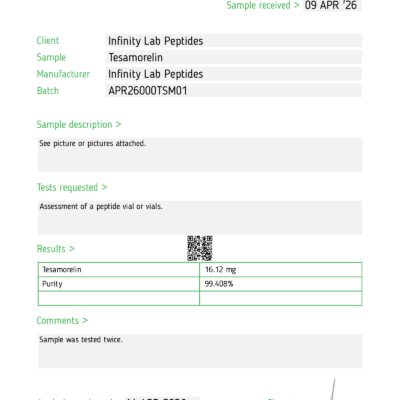
Tesamorelin 10 mg
$103.99 -


GHK-CU 100 mg
$92.99 -

DSIP 15 mg
$92.99 -

SS-31 50 mg
$230.99 -


GLP-3
Price range: $103.99 through $415.99 -

NAD+ 1000 mg
$115.99 -


TB-500 10 mg
$69.99 -


CJC 1295 + Ipamorelin 10 mg
$103.99 -
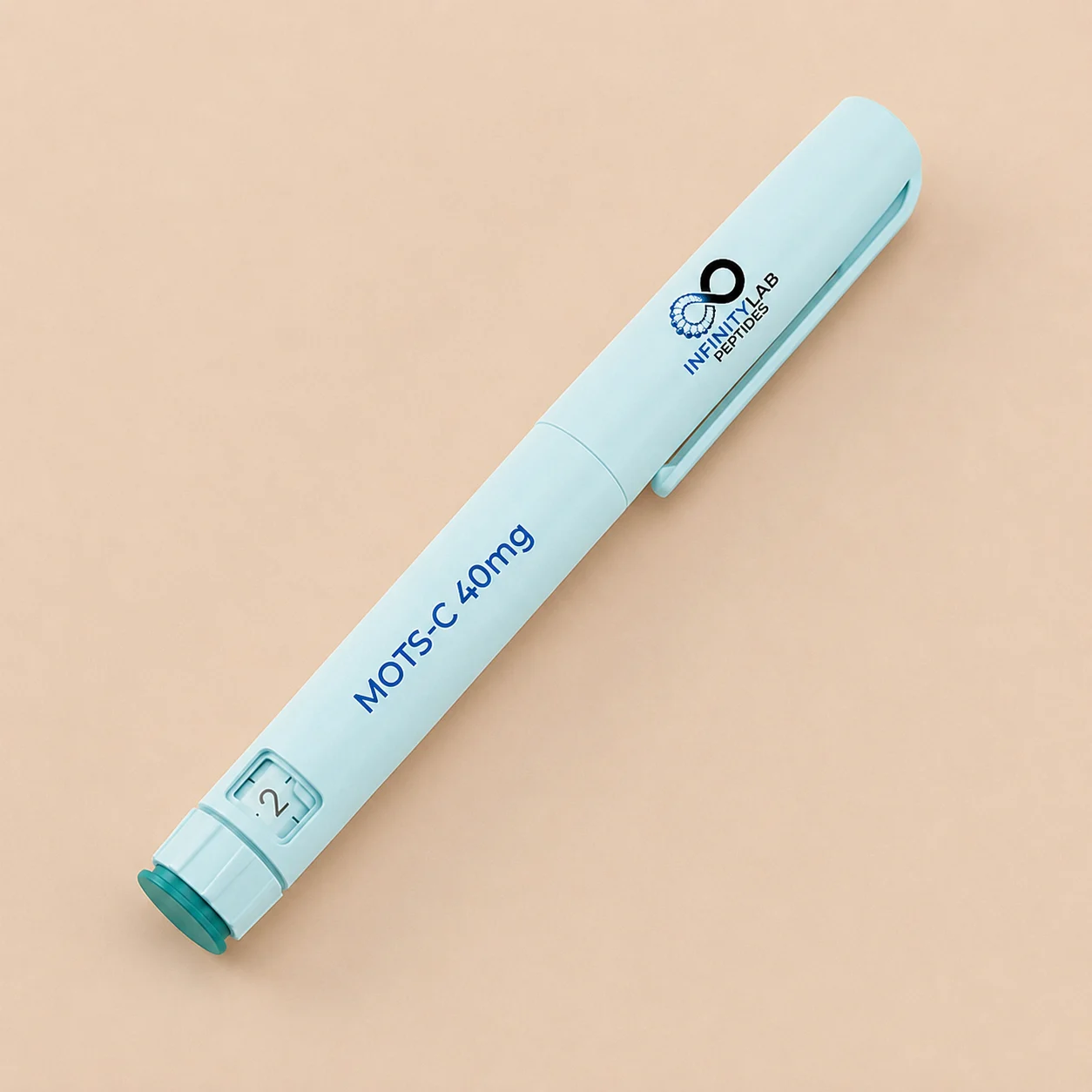
 Hot
MOTS-C 40 mg (Pen)
$265.99