For laboratory research only. Not for human or animal use. This article gives no dosing, administration or therapeutic advice.
Short answer: MOTS-c and 5-Amino-1MQ get compared because both are studied in models of energy metabolism, but they are different kinds of molecule. MOTS-c is a 16-amino-acid peptide that cells make from a gene inside mitochondrial DNA [1]. 5-Amino-1MQ (5-amino-1-methylquinolinium) is a small synthetic ion, roughly one-fourteenth the mass of MOTS-c, designed to block one enzyme, nicotinamide N-methyltransferase (NNMT) [11][2]. Both research lines are almost entirely preclinical. Neither compound has a published interventional human trial that we could find on PubMed.
Below are the spec cards from our own certificate library, then the identity data, the research on each compound, a side-by-side table, the null and mixed results, and the limits of what is known.
Spec cards: what our COA library shows
MOTS-C
Purity: 99.515%
Batch: APR26000MSC01
Analysis date: 14 APR 2026
Lab: Janoshik
Verification key: 34CJ3CIUKX6L
Listings: MOTS-C 10 mg, MOTS-C 40 mg, MOTS-C 40 mg pen
One report is shown for several MOTS-C listings on our COA page. It documents that batch; it is not a separate test of each strength or format.
5-Amino-1MQ
Purity: not shown
Batch: not shown
Analysis date: not shown
Lab: not shown
Listing: 5-Amino-1MQ 50 mg
No certificate is posted for this product on our COA page at the time of writing. We would rather say that plainly than borrow figures from another product.
Identity: two very different molecules
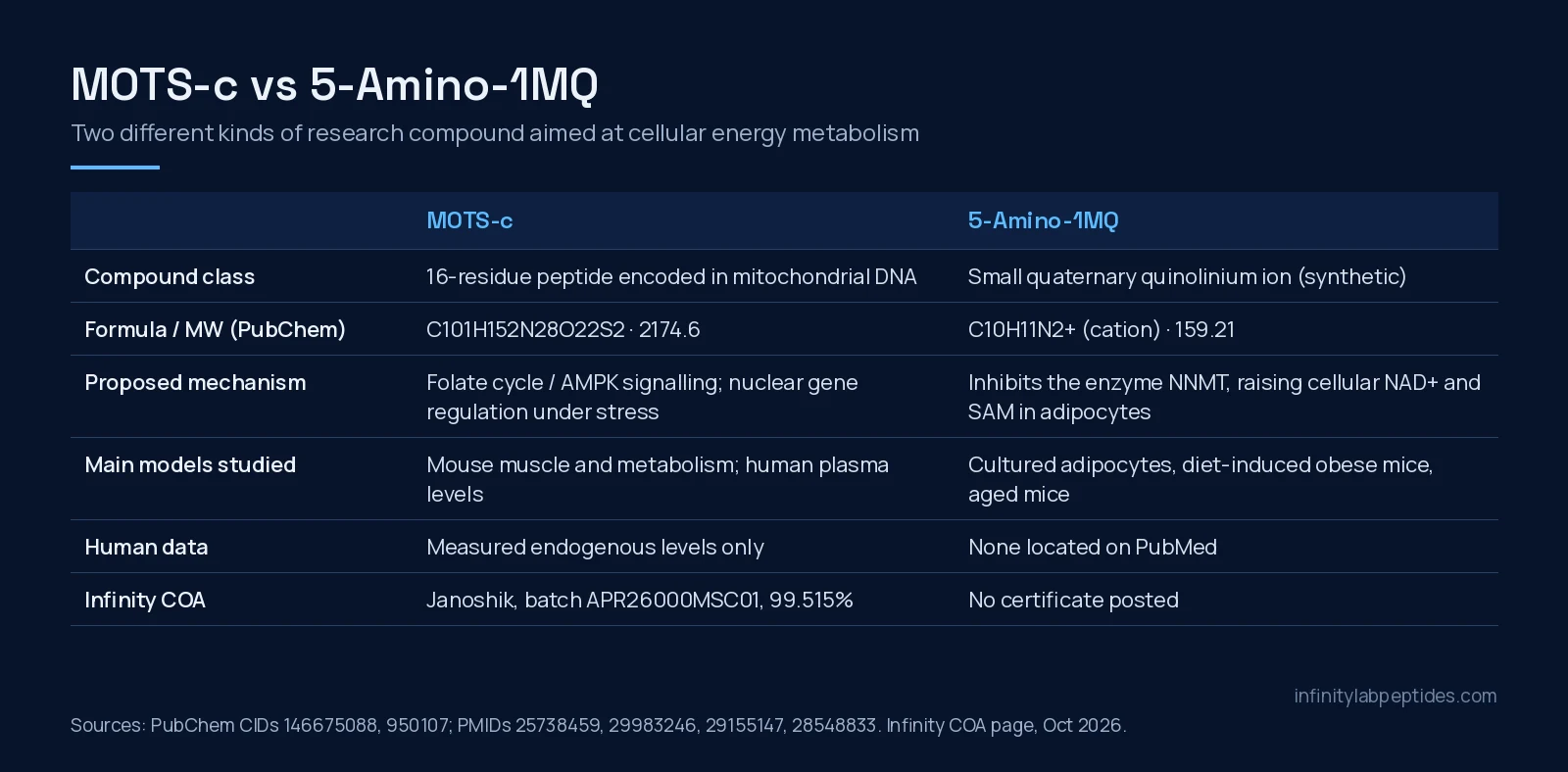
Identity values below come from PubChem, not from certificates or vendor sheets. For 5-Amino-1MQ, PubChem’s parent record describes the positively charged quinolinium ion; material sold as a powder is a salt of that ion, so the counter-ion, and therefore the weight of the solid, depends on the supplier’s form.
| Field | MOTS-c | 5-Amino-1MQ |
|---|---|---|
| Full name | Mitochondrial open reading frame of the 12S rRNA type-c | 5-Amino-1-methylquinolinium |
| Class | Peptide, 16 amino acids | Small molecule (quaternary quinolinium cation) |
| Sequence / structure | MRWQEMGYIFYPRKLR (H-MRWQEMGYIFYPRKLR-OH) | Quinoline ring, N-methylated, amino group at position 5 |
| Molecular formula | C101H152N28O22S2 | C10H11N2+ |
| Molecular weight | 2174.6 g/mol | 159.21 g/mol (cation) |
| CAS (PubChem synonym) | 1627580-64-6 | 685079-15-6 |
| PubChem CID | 146675088 | 950107 |
| Origin | Encoded in the mitochondrial 12S rRNA gene; also made synthetically | Synthetic only |
That difference shapes everything else. A 16-residue peptide is studied mainly by injection in animals and is open to breakdown by proteases. A small charged molecule was screened for its ability to cross cell membranes, which was one of the reasons this chemical series was chosen [2].
MOTS-c: a peptide encoded by mitochondria
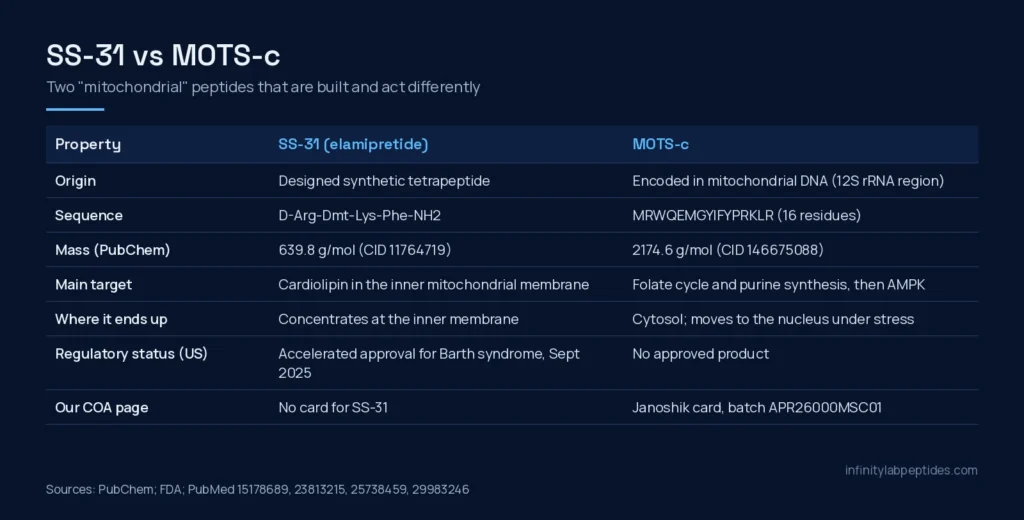
MOTS-c was reported in 2015 as a short open reading frame inside the mitochondrial 12S rRNA gene. In that work its main target tissue appeared to be skeletal muscle, and its actions inside cells inhibited the folate cycle and the de novo purine synthesis tied to it, leading to activation of AMPK. In mice, MOTS-c treatment prevented insulin resistance linked to age and to a high-fat diet, and prevented diet-induced obesity [1].
A 2018 study added a second layer: under metabolic stress such as glucose restriction, MOTS-c moved into the nucleus in an AMPK-dependent way, regulated a broad set of genes, including those with antioxidant response elements, and interacted with stress-responsive transcription factors such as NRF2. That work used cultured cells [3].
Later mouse studies widened the picture. One reported better physical performance in young, middle-aged and old mice given MOTS-c, and better physical capacity when treatment began late in life [4]. A metabolomics study in diet-induced obese mice found that three plasma pathways (sphingolipid, monoacylglycerol and dicarboxylate metabolism) were lower in MOTS-c-injected animals [5].
What human studies of MOTS-c actually measured
Human data on MOTS-c are about the body’s own peptide, not about giving it. Exercise raised MOTS-c in skeletal muscle and in circulation in the 2021 aging paper [4]. In a randomized study of acute exercise in 30 adults, levels of mitochondrial-derived peptides in plasma did not correlate with fitness measures such as VO2max, leg strength or muscle mitochondrial DNA copy number [6]. In a secondary analysis of a 16-week exercise trial in breast cancer survivors, plasma MOTS-c rose in non-Hispanic white participants but not in Hispanic participants [7].
Genetics matters too. An East Asian mitochondrial variant, m.1382A>C, changes lysine 14 to glutamine (K14Q). Across three cohorts totalling 27,527 people, men carrying the C-allele had a higher prevalence of type 2 diabetes; in high-fat-fed male mice, the normal peptide reduced weight and improved glucose tolerance while the K14Q form did not [8].
5-Amino-1MQ: blocking NNMT
To follow the 5-Amino-1MQ literature you first need its target. NNMT is a cytosolic enzyme that methylates nicotinamide (vitamin B3) using S-adenosylmethionine (SAM) as the methyl donor. Nicotinamide is a precursor of NAD+, so NNMT sits where NAD+ salvage, methyl-donor supply and, through SAM, histone methylation meet [9].
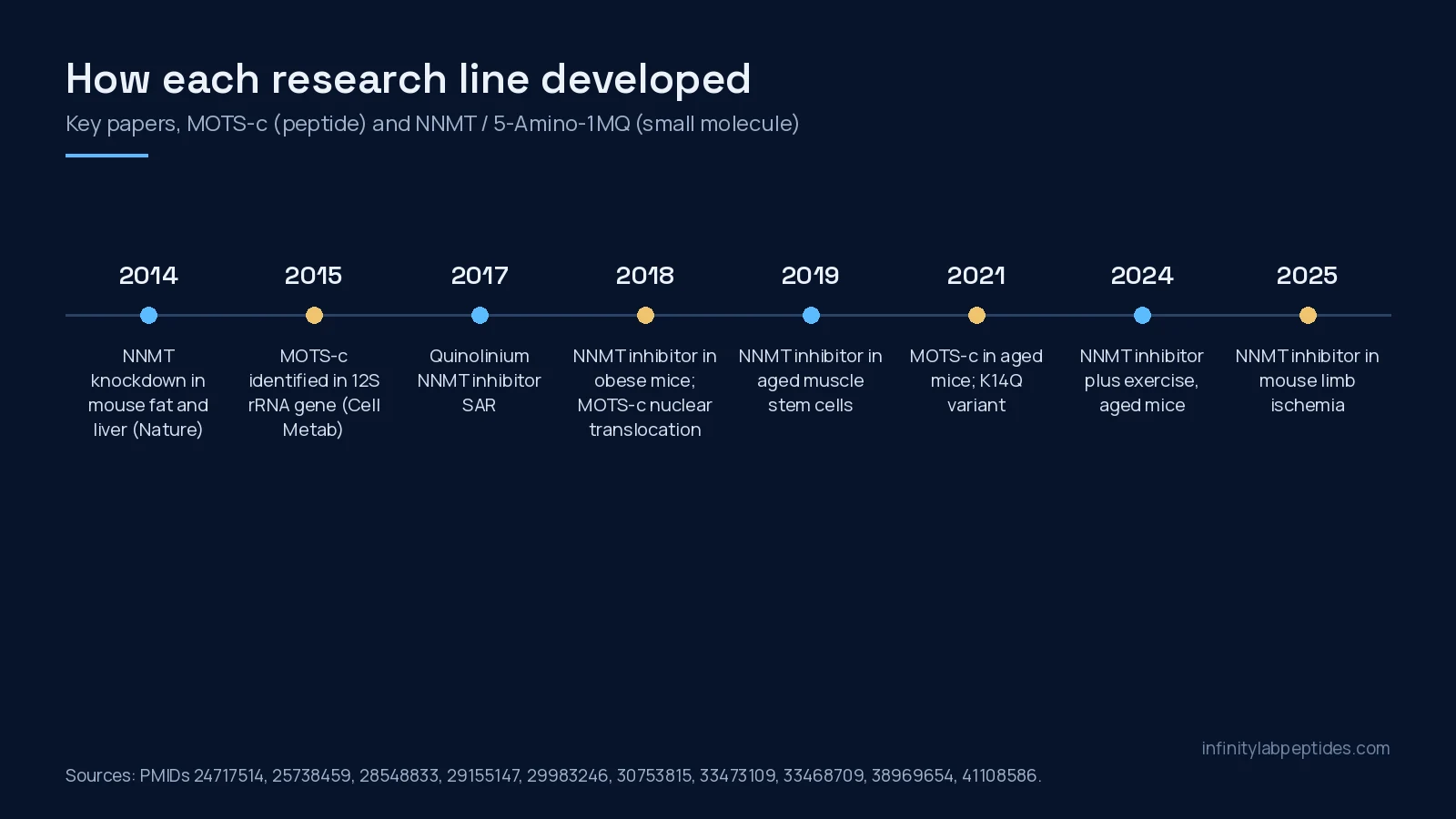
The case for NNMT as a metabolic target came first from genetics, not from 5-Amino-1MQ. In a 2014 mouse study, NNMT expression was raised in white adipose tissue and liver of obese and diabetic mice, and knocking NNMT down in those tissues protected against diet-induced obesity by increasing cellular energy expenditure; knockdown raised adipose SAM and NAD+ levels [9]. In people, NNMT expression in both omental and subcutaneous white fat was roughly twice as high in patients with type 2 diabetes as in controls, and it tracked inversely with insulin sensitivity in insulin-resistant individuals; exercise and bariatric surgery were each associated with lower adipose NNMT expression [10]. Those human findings are associations with the enzyme, not data on any inhibitor.
From a screening series to a named compound
A 2017 structure-activity study screened N-methylated quinolinium, isoquinolinium, pyridinium and benzimidazolium/benzothiazolium analogues and found quinoliniums to be a promising scaffold, with inhibition in the low micromolar range and docking that placed them in NNMT’s nicotinamide-binding site [11]. A 2018 follow-up tested permeability, selectivity and metabolic effects. Methylquinolinium analogues with primary amine substitutions crossed membranes well and did not inhibit related SAM-dependent methyltransferases or NAD+ salvage enzymes. In cultured adipocytes they lowered the NNMT product 1-methylnicotinamide, raised NAD+ and SAM, and suppressed lipogenesis. In diet-induced obese mice, a potent inhibitor from the series lowered body weight and white adipose mass, and the authors reported no change in total food intake and no observable adverse effects [2].
The name 5-amino-1-methylquinolinium appears explicitly in later papers. A 2022 mouse study combined it with a switch to a low-fat diet in diet-induced obese mice and examined the gut microbiome: minimal microbiome differences were seen between lean and obese controls, while mice switched to the low-fat diet, with or without the inhibitor, differed from both [12]. A 2021 cell study reported that 5-amino-1MQ slowed proliferation of HeLa cervical cancer cells in a concentration- and time-dependent way without apparently affecting HEK-293 cells [13].
Muscle studies in aged and injured mice
NNMT inhibition has also been studied in muscle. In 24-month-old mice given a local muscle injury, an NNMT inhibitor increased muscle stem cell proliferation and fusion, and the injured muscle showed larger fibres and higher peak torque than in controls; a C2C12 myoblast experiment pointed the same way [14]. A 2024 study treated mice from 22 to 24 months of age with an NNMT inhibitor, intensive exercise, or both; grip strength rose in each treated group, and the combination produced the largest change [15]. In a 2025 mouse model of limb ischemia, the inhibitor did not change perfusion recovery, capillary density, muscle mass or fibre size, yet it improved strength, power and work in the ischemic limb [16].
Side-by-side research comparison
| Question | MOTS-c | 5-Amino-1MQ |
|---|---|---|
| What is it? | Endogenous mitochondrial-derived peptide [1] | Synthetic methylquinolinium NNMT inhibitor [11][12] |
| Primary target | No single receptor identified; folate cycle and purine synthesis, AMPK activation [1] | The enzyme NNMT, at its nicotinamide-binding site [11] |
| Where it acts | Skeletal muscle proposed as main target tissue; nuclear translocation under stress [1][3] | Adipocytes in the first studies; later aged and ischemic muscle [2][14][16] |
| Strongest models | Mice on high-fat diet; aged mice [1][4] | Diet-induced obese mice; aged mice [2][15] |
| Human evidence | Endogenous levels only: exercise responses, genetic variant, observational studies [6][8][17] | None for the compound; human data are on NNMT expression [10] |
| Genetic support for the target | K14Q variant weakens the peptide’s effect in mice [8] | NNMT knockdown in mice; knockout results are sex- and diet-specific [9][18] |
| Key mixed or null findings | Plasma level similar in lean and obese adults [17] | Knockout did not improve glucose tolerance [18]; no perfusion effect in ischemia [16] |
Read the table as a map of where each research program has looked, not as a ranking. The two compounds were never tested head to head in any paper we found, so no row here says one “works better” than the other.
Null and mixed results worth knowing
- MOTS-c levels and obesity. In a small study of lean and obese adults (10 per group), plasma MOTS-c was similar in the two groups; its link with insulin-resistance indexes held only in the lean individuals [17]. A 2024 meta-analysis found the opposite direction in different groups: circulating MOTS-c was lower in people with type 2 diabetes but higher in people with obesity [19]. The human picture is not a simple “low MOTS-c” story.
- Exercise and plasma MOTS-c. Plasma mitochondrial-derived peptides did not track VO2max, leg strength or muscle mtDNA copy number after acute exercise [6], and the 16-week training rise was seen in one ethnic subgroup only [7].
- Sex differences. In the K14Q work, female mice did not respond to MOTS-c and the human association with diabetes was seen in men, not women [8].
- NNMT deletion is not a clean copy of knockdown. NNMT knockout mice on a standard diet had no obvious phenotype; male knockouts on a high-fat diet had better insulin sensitivity and female knockouts on a Western diet gained less weight, but no improvement in glucose tolerance was observed. In a human weight-reduction study, adipose NNMT expression rose while plasma 1-methylnicotinamide fell [18].
- Muscle function without structural change. In the limb-ischemia model, the NNMT inhibitor left perfusion, capillary density, muscle mass and fibre size unchanged [16].
What the evidence does not show
- No head-to-head study. We found no paper comparing MOTS-c with 5-Amino-1MQ, or testing them together, in any model.
- No interventional human trial of either compound. Human MOTS-c data describe the body’s own peptide [4][6]; human NNMT data describe the enzyme in fat tissue [10]. Claims online that 5-Amino-1MQ has “clinical studies” in people are not supported by anything we could find on PubMed.
- Mouse results are not human results. Weight, fat-mass, grip-strength and torque findings come from mice, often diet-induced obese or very old animals, studied for weeks [2][4][15].
- Mechanism is still being mapped. MOTS-c has no identified cell-surface receptor in these papers; its effects run through metabolic pathways and nuclear gene regulation [1][3]. For 5-Amino-1MQ, the raised NAD+ and SAM were shown in cultured adipocytes [2], and the downstream steps in living animals are proposed rather than settled.
- Not every paper names the exact compound. Several NNMT-inhibitor abstracts describe “a potent NNMT inhibitor” from the methylquinolinium series rather than naming 5-amino-1-methylquinolinium [2][14][15]. We have attributed results only as precisely as each abstract allows.
- A COA is not biological evidence. A purity report confirms what is in a vial; it says nothing about what a compound does in any model.
Reading the documentation for each
Because the two compounds are so different, their certificates check different things. For a peptide like MOTS-c, a useful report pairs a chromatographic purity figure with a mass that matches the expected 2174.6 g/mol. For 5-Amino-1MQ, the mass to look for is the quinolinium ion (about 159 g/mol), and the report should say which salt form was tested, since that changes the weight of the powder.
On our COA page, the MOTS-C report is Janoshik batch APR26000MSC01, 99.515%, analysed 14 APR 2026, verification key 34CJ3CIUKX6L, and it is shown for several MOTS-C listings. No 5-Amino-1MQ certificate is posted at the time of writing. If you are comparing sources, our research peptides overview explains how our listings are organised, and you can buy research peptides in Canada from the full catalogue.
Frequently asked questions
Is 5-Amino-1MQ a peptide?
No. 5-Amino-1MQ (5-amino-1-methylquinolinium) is a small synthetic quinolinium ion with a PubChem cation weight of 159.21 g/mol. MOTS-c is a 16-amino-acid peptide of 2174.6 g/mol. They are often sold side by side, but they are different classes of molecule.
How does MOTS-c differ from 5-Amino-1MQ in mechanism?
In published cell and mouse studies, MOTS-c inhibits the folate cycle and linked purine synthesis, activates AMPK and can move into the nucleus to regulate genes under metabolic stress. 5-Amino-1MQ inhibits the enzyme NNMT, which raised NAD+ and SAM levels in cultured fat cells.
Have MOTS-c or 5-Amino-1MQ been tested in human trials?
We found no published interventional human trial of either compound on PubMed. Human MOTS-c studies measure the body’s own peptide during exercise or in genetic cohorts, and human NNMT studies measure the enzyme in fat tissue.
Has anyone compared MOTS-c and 5-Amino-1MQ directly?
Not in any paper we could find. Each has its own preclinical literature, mainly in diet-induced obese and aged mice, so any comparison is indirect and should be read that way.
Is there a COA for MOTS-C and 5-Amino-1MQ at Infinity Lab Peptides?
Our COA page shows one Janoshik report for MOTS-C, batch APR26000MSC01, 99.515%, analysed 14 APR 2026, listed for several MOTS-C products. No certificate is posted for 5-Amino-1MQ 50 mg at the time of writing.
Research-use notice
MOTS-C and 5-Amino-1MQ from Infinity Lab Peptides are sold for laboratory research and analytical use only. They are not for human or animal consumption, and nothing in this article is medical advice, a usage instruction or a treatment recommendation. Summaries of published studies describe what those studies reported in their own models; they are not claims about any product.
References
- Lee C, Zeng J, Drew BG et al. (2015). The mitochondrial-derived peptide MOTS-c promotes metabolic homeostasis and reduces obesity and insulin resistance. Cell Metab. PMID: 25738459. doi: 10.1016/j.cmet.2015.02.009.
- Neelakantan H, Vance V, Wetzel MD et al. (2018). Selective and membrane-permeable small molecule inhibitors of nicotinamide N-methyltransferase reverse high fat diet-induced obesity in mice. Biochem Pharmacol. PMID: 29155147. doi: 10.1016/j.bcp.2017.11.007.
- Kim KH, Son JM, Benayoun BA et al. (2018). The Mitochondrial-Encoded Peptide MOTS-c Translocates to the Nucleus to Regulate Nuclear Gene Expression in Response to Metabolic Stress. Cell Metab. PMID: 29983246. doi: 10.1016/j.cmet.2018.06.008.
- Reynolds JC, Lai RW, Woodhead JST et al. (2021). MOTS-c is an exercise-induced mitochondrial-encoded regulator of age-dependent physical decline and muscle homeostasis. Nat Commun. PMID: 33473109. doi: 10.1038/s41467-020-20790-0.
- Kim SJ, Miller B, Mehta HH et al. (2019). The mitochondrial-derived peptide MOTS-c is a regulator of plasma metabolites and enhances insulin sensitivity. Physiol Rep. PMID: 31293078. doi: 10.14814/phy2.14171.
- von Walden F, Fernandez-Gonzalo R, Norrbom J et al. (2021). Acute endurance exercise stimulates circulating levels of mitochondrial-derived peptides in humans. J Appl Physiol (1985). PMID: 34351816. doi: 10.1152/japplphysiol.00706.2019.
- Dieli-Conwright CM, Sami N, Norris MK et al. (2021). Effect of aerobic and resistance exercise on the mitochondrial peptide MOTS-c in Hispanic and Non-Hispanic White breast cancer survivors. Sci Rep. PMID: 34413391. doi: 10.1038/s41598-021-96419-z.
- Zempo H, Kim SJ, Fuku N et al. (2021). A pro-diabetogenic mtDNA polymorphism in the mitochondrial-derived peptide, MOTS-c. Aging (Albany NY). PMID: 33468709. doi: 10.18632/aging.202529.
- Kraus D, Yang Q, Kong D et al. (2014). Nicotinamide N-methyltransferase knockdown protects against diet-induced obesity. Nature. PMID: 24717514. doi: 10.1038/nature13198.
- Kannt A, Pfenninger A, Teichert L et al. (2015). Association of nicotinamide-N-methyltransferase mRNA expression in human adipose tissue and the plasma concentration of its product, 1-methylnicotinamide, with insulin resistance. Diabetologia. PMID: 25596852. doi: 10.1007/s00125-014-3490-7.
- Neelakantan H, Wang HY, Vance V et al. (2017). Structure-Activity Relationship for Small Molecule Inhibitors of Nicotinamide N-Methyltransferase. J Med Chem. PMID: 28548833. doi: 10.1021/acs.jmedchem.7b00389.
- Dimet-Wiley A, Wu Q, Wiley JT et al. (2022). Reduced calorie diet combined with NNMT inhibition establishes a distinct microbiome in DIO mice. Sci Rep. PMID: 35013352. doi: 10.1038/s41598-021-03670-5.
- Akar S, Duran T, Azzawri AA et al. (2021). Small molecule inhibitor of nicotinamide N-methyltransferase shows anti-proliferative activity in HeLa cells. J Obstet Gynaecol. PMID: 33645410. doi: 10.1080/01443615.2020.1854696.
- Neelakantan H, Brightwell CR, Graber TG et al. (2019). Small molecule nicotinamide N-methyltransferase inhibitor activates senescent muscle stem cells and improves regenerative capacity of aged skeletal muscle. Biochem Pharmacol. PMID: 30753815. doi: 10.1016/j.bcp.2019.02.008.
- Dimet-Wiley AL, Latham CM, Brightwell CR et al. (2024). Nicotinamide N-methyltransferase inhibition mimics and boosts exercise-mediated improvements in muscle function in aged mice. Sci Rep. PMID: 38969654. doi: 10.1038/s41598-024-66034-9.
- Dong G, Choi J, Li Y et al. (2025). Nicotinamide N-methyltransferase inhibition improves limb function in experimental peripheral artery disease. Physiol Rep. PMID: 41108586. doi: 10.14814/phy2.70615.
- Cataldo LR, Fernández-Verdejo R, Santos JL et al. (2018). Plasma MOTS-c levels are associated with insulin sensitivity in lean but not in obese individuals. J Investig Med. PMID: 29593067. doi: 10.1136/jim-2017-000681.
- Brachs S, Polack J, Brachs M et al. (2019). Genetic Nicotinamide N-Methyltransferase (Nnmt) Deficiency in Male Mice Improves Insulin Sensitivity in Diet-Induced Obesity but Does Not Affect Glucose Tolerance. Diabetes. PMID: 30552109. doi: 10.2337/db18-0780.
- Zhou Q, Yin S, Lei X et al. (2024). The correlation between mitochondrial derived peptide (MDP) and metabolic states: a systematic review and meta-analysis. Diabetol Metab Syndr. PMID: 39160573. doi: 10.1186/s13098-024-01405-w.