For laboratory research only. Not for human or animal use. This article gives no dosing, administration or therapeutic advice.
Short answer: BPC-157 and GHK-Cu are often filed together as “repair peptides”, but they are different kinds of molecule with different histories. BPC-157 is a synthetic 15-residue fragment of a larger protein that its discoverers isolated from gastric juice in the early 1990s [1]. GHK-Cu is a three-residue peptide, glycyl-histidyl-lysine, found in human plasma in the 1970s, which readily forms a copper(II) complex and was proposed as a copper carrier [2],[3],[4]. In the lab, BPC-157 is mostly studied in rat injury models (tendon, gut, liver, blood vessels), while GHK-Cu is mostly studied as a regulator of collagen and matrix turnover in fibroblasts and wound models [5],[6]. Neither has an established clinical role, and the human evidence for both is thin.
This page shows the batch documentation we post for each listing, then compares where each compound came from, what it is chemically, the mechanisms proposed for it, which tissue models it has actually been tested in, and what the literature still leaves open.
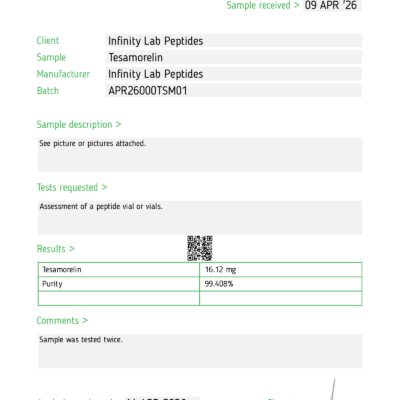
Batch documentation at a glance
These cards repeat only what our COA library shows today.
BPC-157
Listing: BPC-157 10 mg
Purity: 99.943%
Batch: APR2600015701
Analysis date: 14 APR 2026
Lab: Janoshik
Verification key: 6ZLN4DX15H2X
The key opens the original Janoshik report, so the purity and identity results can be checked against the lab’s own record.
GHK-Cu
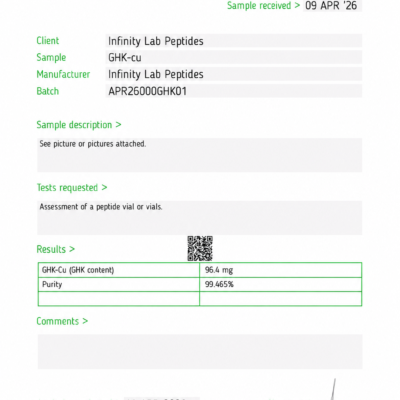
Listing: GHK-Cu 100 mg
Purity: 99.465%
Batch: APR26000GHK01
Analysis date: 14 APR 2026
Lab: Janoshik
Verification key: 6154WM73YX5R
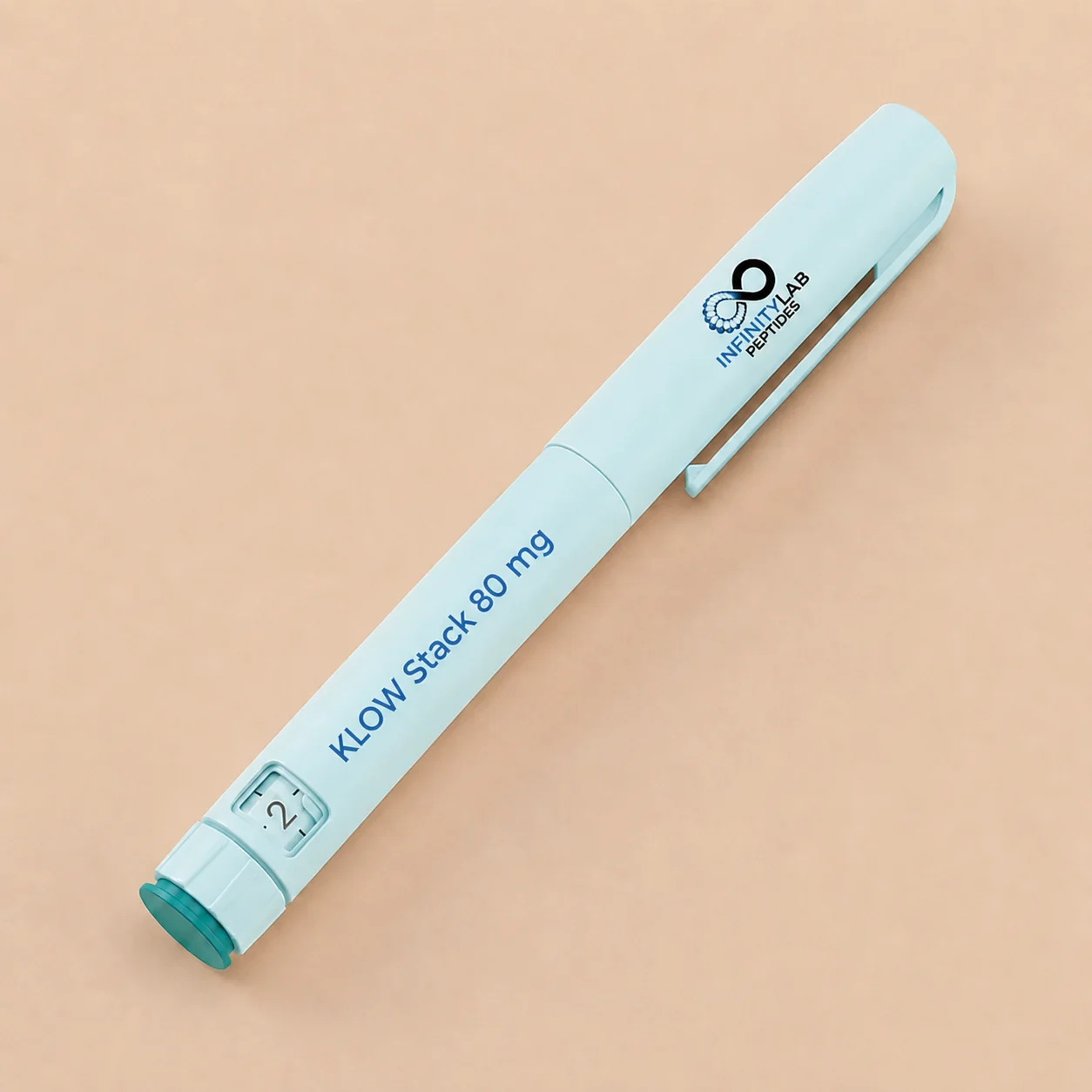
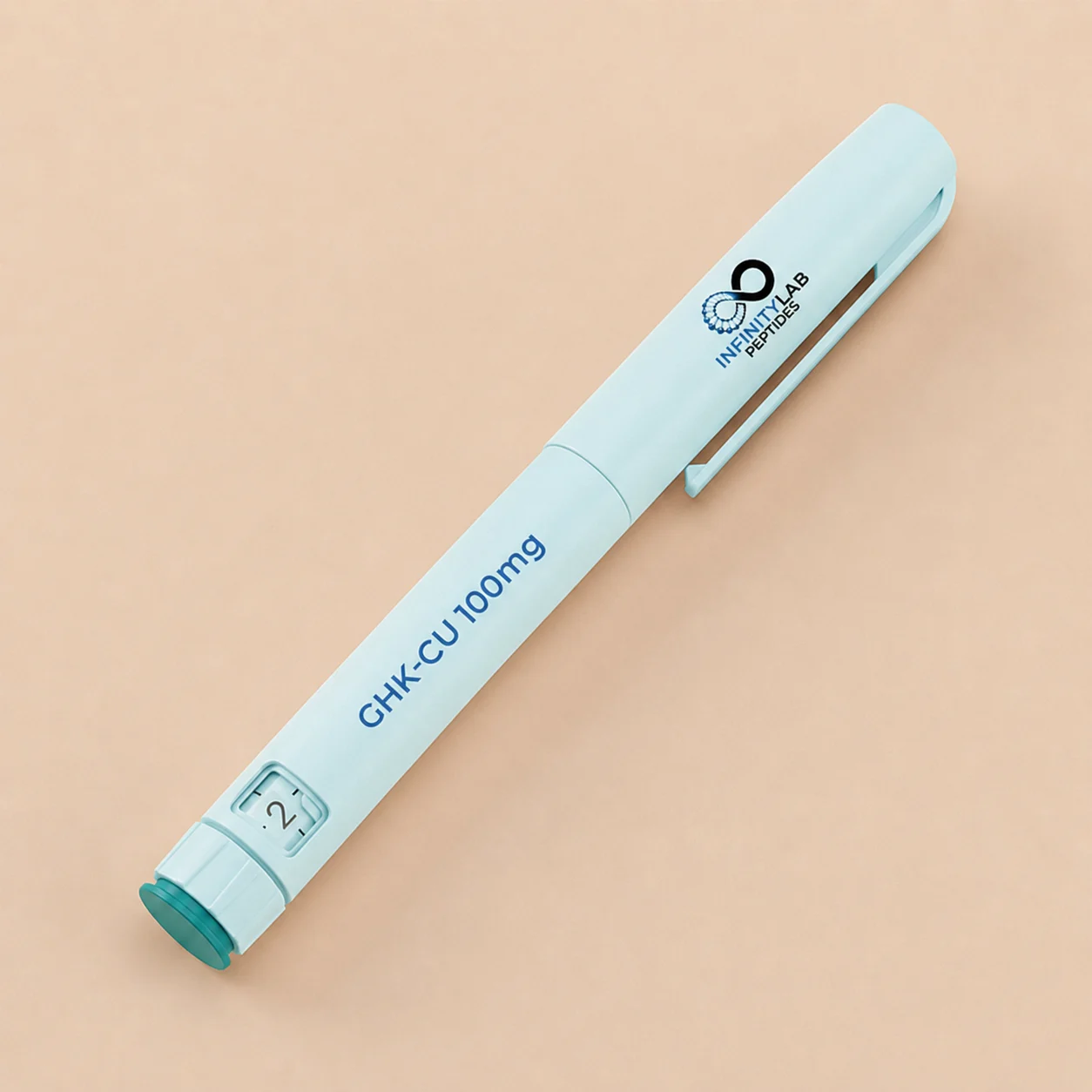
The library shows this one report for both the GHK-Cu vial and the GHK-Cu pen entries.
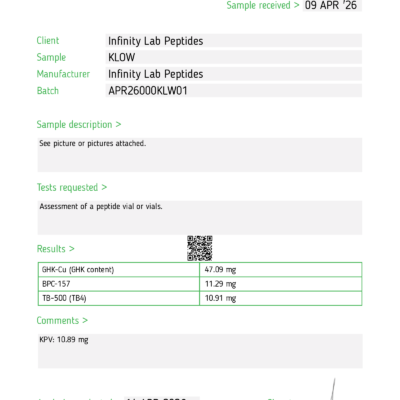
One point specific to copper peptides: a purity figure describes the peptide, but GHK-Cu is a peptide-metal complex. When you open the report, look at what was measured, the peptide, the copper, or both. A recent review argues that much of the GHK-Cu literature never defines how much of the copper is actually bound, which makes studies hard to compare [7].
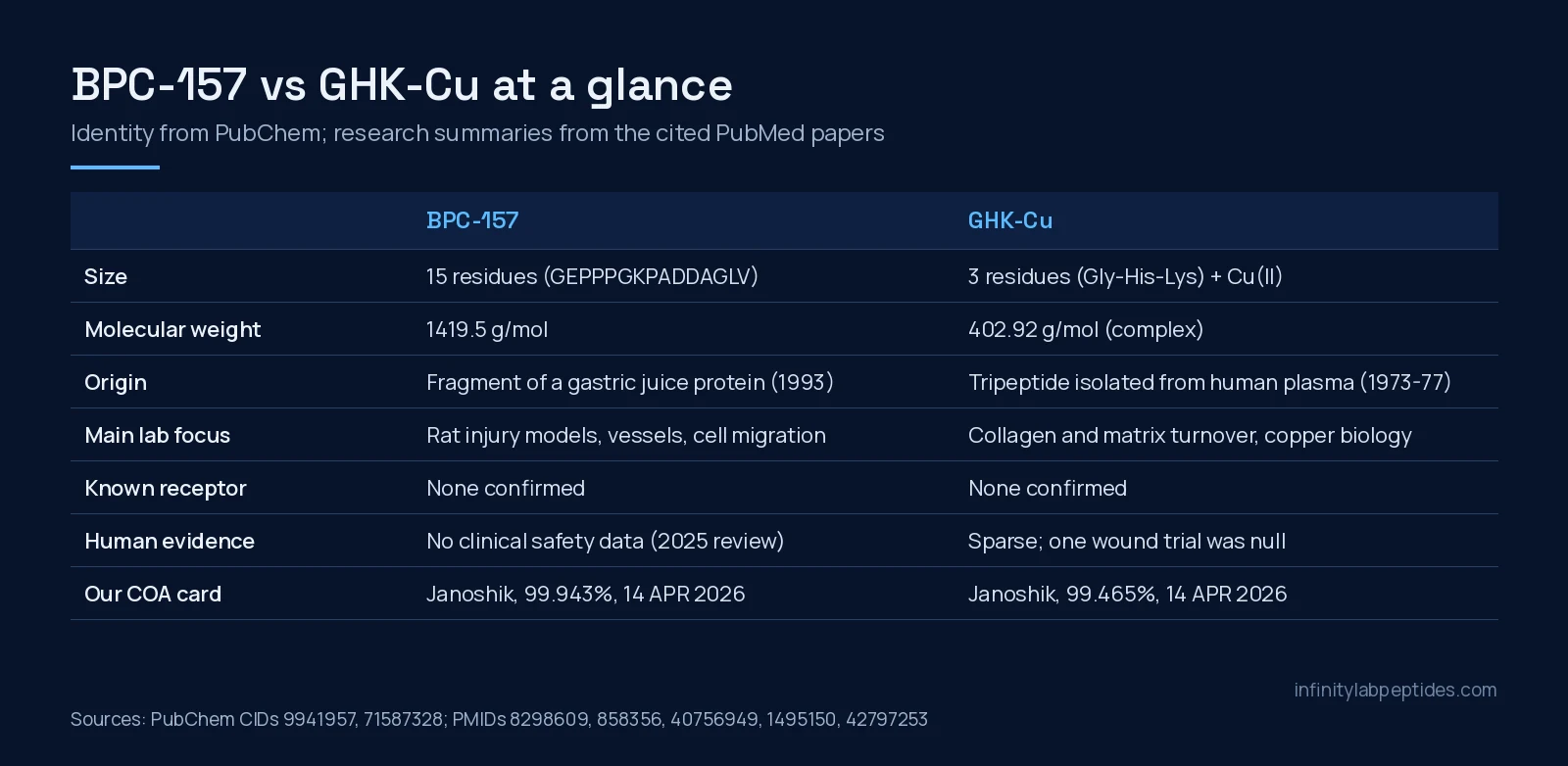
Identity: a 15-mer and a copper-bound 3-mer
The identifiers below come from PubChem records, not from product labels.
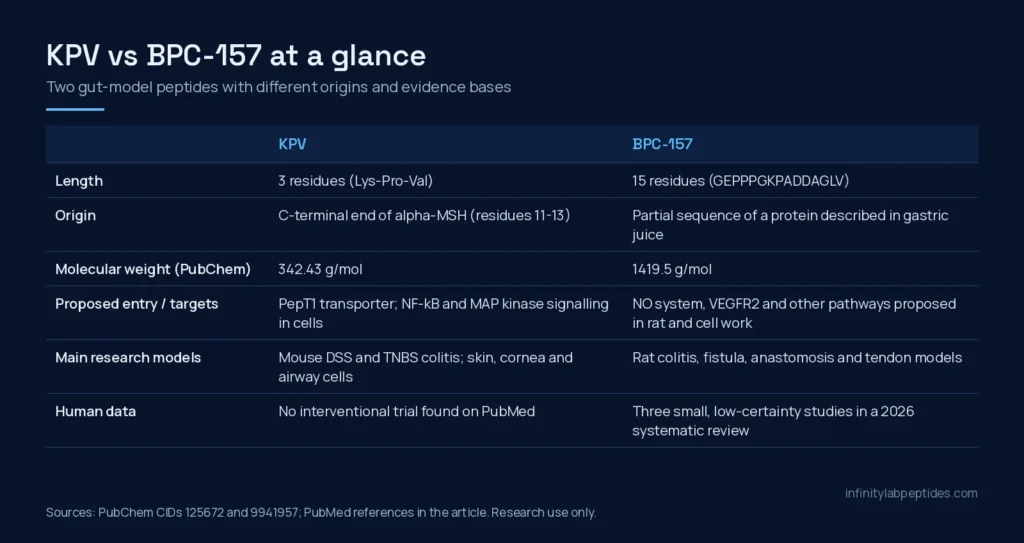
| Field | BPC-157 | GHK (free peptide) | GHK-Cu (copper complex) |
|---|---|---|---|
| Sequence | GEPPPGKPADDAGLV (15 residues) | Gly-His-Lys (3 residues) | Gly-His-Lys bound to Cu(II) |
| Molecular formula | C62H98N16O22 | C14H24N6O4 | C14H23CuN6O4+ |
| Molecular weight | 1419.5 g/mol | 340.38 g/mol | 402.92 g/mol |
| CAS (PubChem synonym) | 137525-51-0 | 49557-75-7 | 89030-95-5 |
| Other names | Bepecin, PL-10, PLD-116, PL-14736 | Prezatide, glycyl-histidyl-lysine | Prezatide copper, copper tripeptide-1 |
| PubChem CID | 9941957 | 73587 | 71587328 |
| Origin | Synthetic fragment of a gastric juice protein (“BPC”) | Isolated from human plasma | Forms when GHK meets copper(II) |
The size gap matters for handling and analysis. BPC-157 is a linear pentadecapeptide with three consecutive prolines, while GHK is small enough that its copper complex has been characterised by spectroscopy: at neutral pH it forms a 1:1 complex in which copper is held by nitrogen atoms, one of them from the histidine ring [8].
Two origin stories
BPC-157: a fragment of a stomach protein
In 1993 Sikirić and colleagues described a gastric juice protein they named BPC (body protection compound) and a 15-amino-acid fragment of it, BPC 157, which they considered essential for its activity. Their overview framed it within a “stomach-stress-organoprotection” hypothesis and reported protective effects across many organ lesion models in several species [1]. The same year the group reported that BPC 157 reduced liver necrosis and fatty change in three rat liver injury models, compared with dopamine agonists and somatostatin [9]. The fragment later entered early clinical testing for inflammatory bowel disease under the codes PL-10, PLD-116 and PL 14736 [10].
GHK: a plasma tripeptide that carries copper
GHK’s story starts with a 1973 report of a tripeptide in human serum that prolonged the survival of normal liver cells in culture [2]. In 1977 it was identified as glycyl-histidyl-lysine [3]. In 1980 Pickart and colleagues noted that it co-purified with copper, formed copper(II) complexes readily, and increased copper uptake into cultured hepatoma cells, which led them to propose it acts as a copper transport factor [4]. A 1988 study then found GHK-Cu stimulated collagen synthesis in fibroblast cultures at very low concentrations, and pointed out that the GHK sequence occurs within the alpha 2(I) chain of type I collagen, suggesting it could be released at wound sites by proteases [5].
So the starting hypotheses differ. BPC-157 was proposed as a broad organ-protective agent from the stomach; GHK as a carrier that delivers copper and signals matrix repair.
Proposed mechanisms, side by side
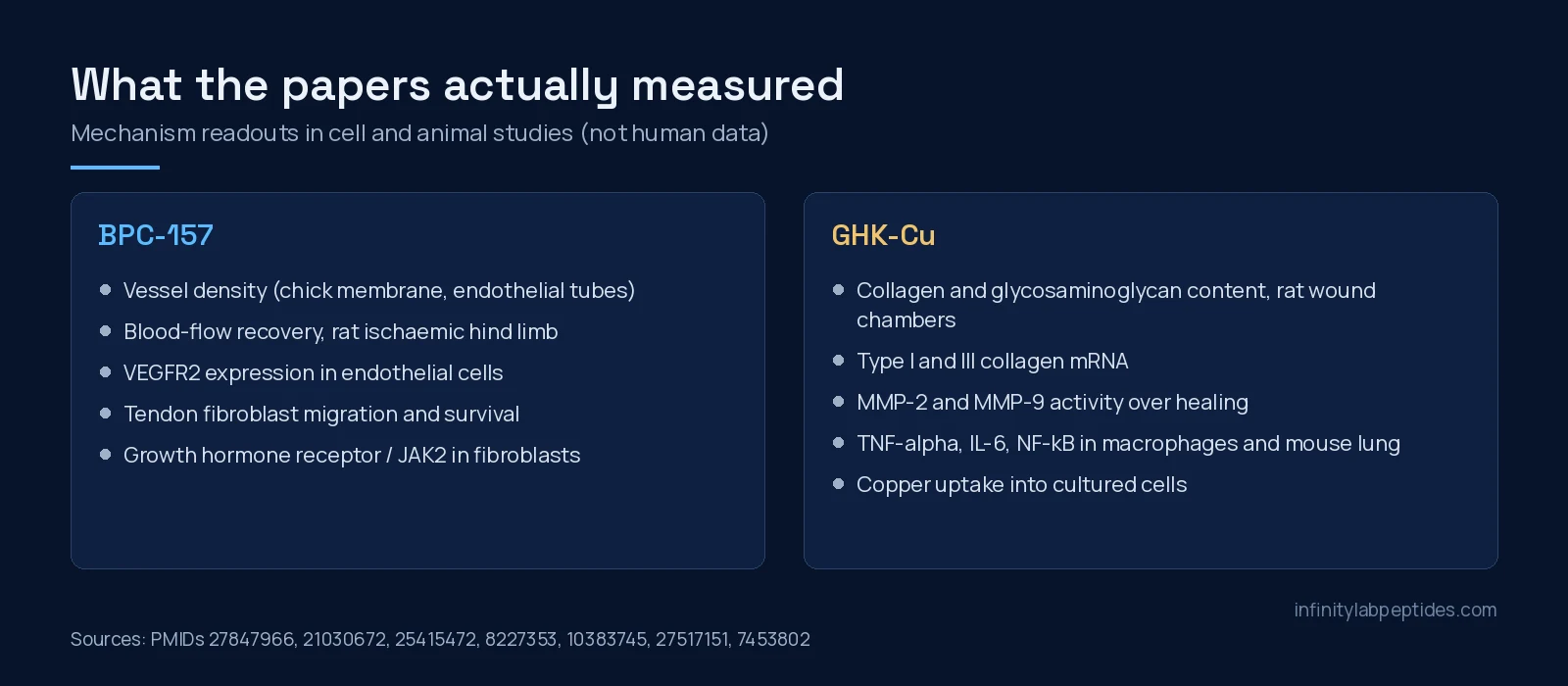
Neither compound has a single confirmed receptor. What exists are pathway observations from cell and animal work:
- BPC-157 and nitric oxide. The originating group’s review links BPC-157 to the nitric oxide (NO) system, describing rat studies in which it reduced either thrombosis or bleeding after vascular injury, and proposing that it competes with both L-NAME (an NO-synthase inhibitor) and L-arginine [11].
- BPC-157 and VEGFR2. An independent group found BPC-157 increased vessel density in the chick chorioallantoic membrane and endothelial tube assays, sped blood-flow recovery in an ischaemic rat hind limb, and raised VEGFR2 (but not VEGF-A) expression in human vascular endothelial cells [12].
- BPC-157 and tendon fibroblasts. In rat tendon fibroblasts, BPC-157 did not directly increase proliferation but improved survival under oxidative stress and increased migration and spreading [13]. A microarray study in the same cells found growth hormone receptor among the most up-regulated genes, with JAK2 activation downstream [14].
- GHK-Cu and matrix synthesis. In a rat wound-chamber model, GHK-Cu increased collagen, glycosaminoglycan, DNA and protein content in a concentration-dependent way, raised type I and III collagen mRNA, and a control tripeptide had no effect [15].
- GHK-Cu and matrix remodelling. In the same model, GHK-Cu increased pro- and active MMP-2 in later stages of healing and prolonged MMP-9 expression in wound tissue, suggesting it shifts remodelling rather than simply adding collagen [16].
- GHK-Cu and inflammatory signalling. In LPS-stimulated macrophages and a mouse model of acute lung injury, GHK-Cu lowered reactive oxygen species, TNF-alpha and IL-6 and suppressed NF-kB p65 and p38 MAPK signalling [17]. Pickart and Margolina have also proposed that gene-expression data may explain GHK’s many reported actions, a review hypothesis rather than a tested mechanism [18].
A useful way to hold the difference: most BPC-157 mechanism papers measure vessels, blood flow and cell migration, while most GHK-Cu papers measure extracellular matrix composition and the enzymes that turn it over.
Which tissue and wound models each has been tested in
Comparison pages often say both compounds “work on” the same tissues. The table shows what was actually tested, and in which species.
| Model | BPC-157 | GHK-Cu |
|---|---|---|
| Tendon | Transected rat Achilles tendon: better biomechanical, functional and histological measures than controls [6]. A 2026 rat Achilles repair study found numerically better histology scores that did not reach statistical significance on total scores, and no added effect when combined with TB-500 [19]. | No tendon study among the sources reviewed here. |
| Ligament | Preclinical ligament studies are included in a 2025 systematic review [20]. | Rat ACL reconstruction: graft stiffness and knee laxity improved at 6 weeks but the difference was gone at 12 weeks; ultimate load, gait and histology did not differ [21]. |
| Skin wounds | Reviewed across incisional, excisional, burn and fistula models in rats [22]. | Rat subcutaneous wound chambers (matrix accumulation and MMP activity) [15],[16]. |
| Gut | Developed for inflammatory bowel disease; rat stomach lesion models [10]. | DSS colitis in mice, with a SIRT1/STAT3 mechanism tested by gene silencing in cell co-culture [23]. |
| Lung | Not in the sources reviewed here. | LPS acute lung injury in mice [17]. |
| Liver | Three rat liver injury models [9]. | The 1973 serum tripeptide (GHK) prolonged survival of cultured liver cells [2]. |
| Blood vessels | Chick membrane, endothelial cells, rat ischaemic hind limb [12]. | Angiogenesis is among the preclinical effects mapped in a 2026 review; not tested directly in the other sources here [7]. |
| Human studies | A 2025 systematic review found 35 preclinical studies, one clinical study, and no clinical safety data [20]. | A randomised, evaluator-blinded venous ulcer trial found a copper tripeptide cream did not differ from placebo [24]. |
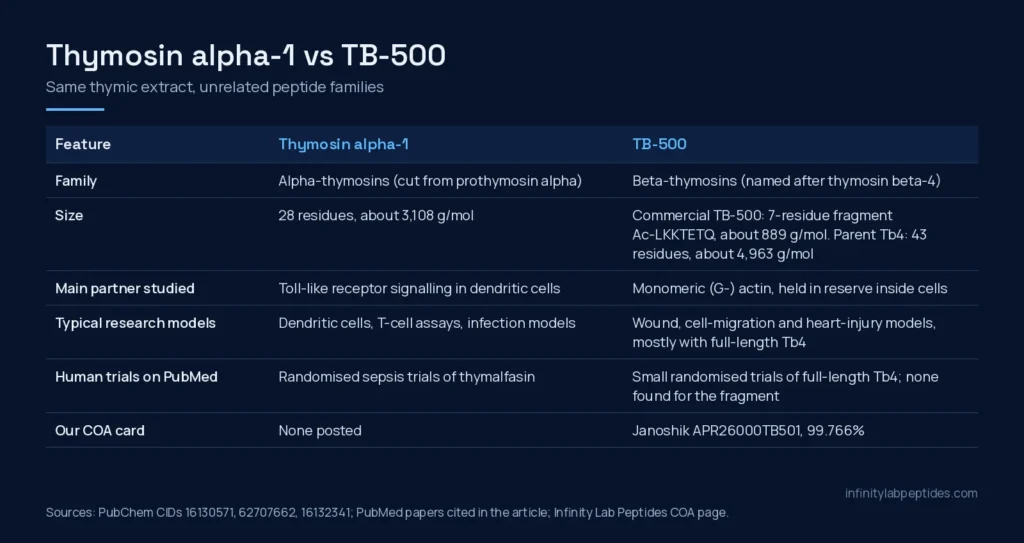
The overlap is smaller than it looks. The only model types where both appear in our sources are skin wounds and gut inflammation, and even there the designs differ: BPC-157 skin data come mainly from one group’s lesion models, while the GHK-Cu skin data are wound chambers that measure matrix chemistry. For a comparison of BPC-157 with another tendon-model peptide, see our BPC-157 vs TB-500 comparison.
Pharmacokinetics and formulation questions
For BPC-157, the 2025 systematic review reports hepatic metabolism, renal clearance and a half-life under 30 minutes [20]. A 2026 review calls this a pharmacokinetic-pharmacodynamic disconnect: a plasma half-life under 30 minutes in preclinical work, set against biological effects reported for hours to days. The same review notes there is no approved formulation and no completed phase II trial [25].
For GHK-Cu the open question is chemical identity. A 2026 evidence-mapping review argues that studies often treat “GHK-Cu” as one ingredient even though the free peptide, the copper complex, and free copper behave differently, and that delivery studies rarely report how much copper is actually bound or released intact [7]. For a lab, that is a reason to record exactly what form was used.
Who did the research
Source concentration is a real difference between the two literatures. Many BPC-157 papers, including the 1993 description, the liver study, the NO-system review, the wound review and the IBD trial overview, come from the same research group (Sikirić, Seiwerth and colleagues) [1],[9],[11],[22],[10]. Independent groups have reported tendon and vascular findings [13],[12], but replication outside the originating group is limited. Early GHK-Cu work also came from a small circle: Pickart and colleagues proposed the copper-carrier and gene-data hypotheses, and Maquart and colleagues ran the wound-chamber studies, with Pickart a co-author on the first fibroblast paper [4],[18],[5],[15]. Later ligament, lung and colitis studies came from other teams [21],[17],[23].
What the evidence does not show
- That either compound improves tissue repair in people. The 2025 BPC-157 review found one small clinical study and no clinical safety data [20]; the one randomised GHK-Cu wound trial cited here was null [24], and a 2026 review describes the clinical evidence as sparse and not meeting current quality standards [7].
- A known receptor for either peptide. The pathways above (NO, VEGFR2, growth hormone receptor, MMPs, NF-kB, SIRT1/STAT3) are downstream observations.
- That the two act on the same repair phase or can be compared directly. We found no study testing BPC-157 and GHK-Cu head to head.
- That effects in one model transfer to another. The ACL study shows GHK-Cu effects faded when treatment stopped [21], and the 2026 Achilles study found BPC-157 differences on total scores were not significant [19].
- Regulatory approval. BPC-157 is not FDA-approved and is banned in professional sport, according to the 2025 review [20]. We found no approved drug containing GHK-Cu in the sources reviewed.
Practical notes for a research buyer
If your work is about matrix composition, collagen types or copper biology, GHK-Cu has the more relevant model history. If it is about rodent injury models, vascular responses or the gastric-protection hypothesis, BPC-157 is the compound with that literature. Either way, check the batch report against the form you need: a peptide purity figure for BPC-157, and peptide plus copper characterisation for GHK-Cu. You can browse the rest of our catalogue and documentation when you buy research peptides in Canada.
Frequently asked questions
Is GHK-Cu the same as GHK?
No. GHK is the free tripeptide glycyl-histidyl-lysine (PubChem CID 73587). GHK-Cu is its copper(II) complex, listed in PubChem as prezatide copper (CID 71587328). Studies do not always state which form, or how much bound copper, they used.
Where does BPC-157 come from?
BPC-157 is a synthetic 15-residue fragment of a protein called BPC that Sikirić and colleagues described isolating from gastric juice in 1993. The research peptide is made by synthesis, not extracted.
Have BPC-157 and GHK-Cu been compared directly?
We found no study testing the two head to head. Their models overlap only partly: both appear in skin-wound and gut-inflammation research, but with different designs and readouts.
Do either have human trial data?
Very little. A 2025 systematic review of BPC-157 found one small clinical study and no clinical safety data. A randomised venous ulcer trial found a copper tripeptide cream did not differ from placebo.
What COA does Infinity Lab Peptides post for these two?
BPC-157: Janoshik, batch APR2600015701, purity 99.943%, 14 APR 2026, key 6ZLN4DX15H2X. GHK-Cu: Janoshik, batch APR26000GHK01, purity 99.465%, 14 APR 2026, key 6154WM73YX5R, shown for both the vial and pen entries.
References
- Sikirić P, Petek M, Rucman R et al. (1993). A new gastric juice peptide, BPC. An overview of the stomach-stress-organoprotection hypothesis and beneficial effects of BPC. J Physiol Paris. PMID: 8298609. doi: 10.1016/0928-4257(93)90038-u.
- Pickart L, Thaler MM (1973). Tripeptide in human serum which prolongs survival of normal liver cells and stimulates growth in neoplastic liver. Nat New Biol. PMID: 4349963.
- Schlesinger DH, Pickart L, Thaler MM (1977). Growth-modulating serum tripeptide is glycyl-histidyl-lysine. Experientia. PMID: 858356. doi: 10.1007/BF02002806.
- Pickart L, Freedman JH, Loker WJ et al. (1980). Growth-modulating plasma tripeptide may function by facilitating copper uptake into cells. Nature. PMID: 7453802. doi: 10.1038/288715a0.
- Maquart FX, Pickart L, Laurent M et al. (1988). Stimulation of collagen synthesis in fibroblast cultures by the tripeptide-copper complex glycyl-L-histidyl-L-lysine-Cu2+. FEBS Lett. PMID: 3169264. doi: 10.1016/0014-5793(88)80509-x.
- Staresinic M, Sebecic B, Patrlj L et al. (2003). Gastric pentadecapeptide BPC 157 accelerates healing of transected rat Achilles tendon and in vitro stimulates tendocytes growth. J Orthop Res. PMID: 14554208. doi: 10.1016/S0736-0266(03)00110-4.
- Mateescu DM, Gavrilescu DM, Mincioaga RI et al. (2026). GHK-Cu as a Bioactive Metallopeptide and Drug-Delivery Cargo: Coordination Chemistry, Formulation Science, Therapeutic Evidence, and a Translational Roadmap. Pharmaceutics. PMID: 42797253. doi: 10.3390/pharmaceutics18091077.
- Freedman JH, Pickart L, Weinstein B et al. (1982). Structure of the Glycyl-L-histidyl-L-lysine–copper(II) complex in solution. Biochemistry. PMID: 6291585. doi: 10.1021/bi00262a004.
- Sikiric P, Seiwerth S, Grabarevic Z et al. (1993). Hepatoprotective effect of BPC 157, a 15-amino acid peptide, on liver lesions induced by either restraint stress or bile duct and hepatic artery ligation or CCl4 administration. A comparative study with dopamine agonists and somatostatin. Life Sci. PMID: 7901724. doi: 10.1016/0024-3205(93)90589-u.
- Sikiric P, Seiwerth S, Brcic L et al. (2006). Stable gastric pentadecapeptide BPC 157 in trials for inflammatory bowel disease (PL-10, PLD-116, PL 14736, Pliva, Croatia). Full and distended stomach, and vascular response. Inflammopharmacology. PMID: 17186181. doi: 10.1007/s10787-006-1531-7.
- Sikiric P, Seiwerth S, Rucman R et al. (2014). Stable gastric pentadecapeptide BPC 157-NO-system relation. Curr Pharm Des. PMID: 23755725. doi: 10.2174/13816128113190990411.
- Hsieh MJ, Liu HT, Wang CN et al. (2017). Therapeutic potential of pro-angiogenic BPC157 is associated with VEGFR2 activation and up-regulation. J Mol Med (Berl). PMID: 27847966. doi: 10.1007/s00109-016-1488-y.
- Chang CH, Tsai WC, Lin MS et al. (2011). The promoting effect of pentadecapeptide BPC 157 on tendon healing involves tendon outgrowth, cell survival, and cell migration. J Appl Physiol (1985). PMID: 21030672. doi: 10.1152/japplphysiol.00945.2010.
- Chang CH, Tsai WC, Hsu YH et al. (2014). Pentadecapeptide BPC 157 enhances the growth hormone receptor expression in tendon fibroblasts. Molecules. PMID: 25415472. doi: 10.3390/molecules191119066.
- Maquart FX, Bellon G, Chaqour B et al. (1993). In vivo stimulation of connective tissue accumulation by the tripeptide-copper complex glycyl-L-histidyl-L-lysine-Cu2+ in rat experimental wounds. J Clin Invest. PMID: 8227353. doi: 10.1172/JCI116842.
- Siméon A, Monier F, Emonard H et al. (1999). Expression and activation of matrix metalloproteinases in wounds: modulation by the tripeptide-copper complex glycyl-L-histidyl-L-lysine-Cu2+. J Invest Dermatol. PMID: 10383745. doi: 10.1046/j.1523-1747.1999.00606.x.
- Park JR, Lee H, Kim SI et al. (2016). The tri-peptide GHK-Cu complex ameliorates lipopolysaccharide-induced acute lung injury in mice. Oncotarget. PMID: 27517151. doi: 10.18632/oncotarget.11168.
- Pickart L, Margolina A (2018). Regenerative and Protective Actions of the GHK-Cu Peptide in the Light of the New Gene Data. Int J Mol Sci. PMID: 29986520. doi: 10.3390/ijms19071987.
- Biçer O, Adanir O, Güleryüz Y et al. (2026). Effects of BPC-157 and TB-500 on Achilles tendon healing in rats: A histopathological and biomechanical study. Jt Dis Relat Surg. PMID: 42542926. doi: 10.52312/jdrs.2026.2951.
- Vasireddi N, Hahamyan H, Salata MJ et al. (2025). Emerging Use of BPC-157 in Orthopaedic Sports Medicine: A Systematic Review. HSS J. PMID: 40756949. doi: 10.1177/15563316251355551.
- Fu SC, Cheuk YC, Chiu WY et al. (2015). Tripeptide-copper complex GHK-Cu (II) transiently improved healing outcome in a rat model of ACL reconstruction. J Orthop Res. PMID: 25731775. doi: 10.1002/jor.22831.
- Seiwerth S, Milavic M, Vukojevic J et al. (2021). Stable Gastric Pentadecapeptide BPC 157 and Wound Healing. Front Pharmacol. PMID: 34267654. doi: 10.3389/fphar.2021.627533.
- Mao S, Huang J, Li J et al. (2025). Exploring the beneficial effects of GHK-Cu on an experimental model of colitis and the underlying mechanisms. Front Pharmacol. PMID: 40672369. doi: 10.3389/fphar.2025.1551843.
- Bishop JB, Phillips LG, Mustoe TA et al. (1992). A prospective randomized evaluator-blinded trial of two potential wound healing agents for the treatment of venous stasis ulcers. J Vasc Surg. PMID: 1495150. doi: 10.1067/mva.1992.37086.
- Mateescu DM, Gavrilescu DM, Constantinescu FE et al. (2026). BPC-157 as an Investigational Peptide Therapeutic: Biopharmaceutical Challenges, Formulation Strategies, and Translational Development Barriers. Pharmaceutics. PMID: 42198317. doi: 10.3390/pharmaceutics18050625.