For laboratory research only. Not for human or animal use. This article gives no dosing, administration or therapeutic advice.
Short answer: GHK-Cu is one defined molecule: the tripeptide glycyl-histidyl-lysine holding a single copper(II) ion[1],[2]. KLOW is a blend that our listing describes as BPC-157, TB-500, KPV and GHK-Cu in one vial. GHK-Cu has five decades of cell, animal and small human studies behind it; each of KLOW’s other three components has its own, mostly animal, literature[3],[4],[5]. We found no published study of the four-component blend itself, and the one rat study that combined two of its parts (BPC-157 with TB-500) found no added benefit over either alone[6]. A single compound is easier to verify, dose in a protocol and interpret; a blend adds variables you have to control for.
This comparison covers documentation first, then identity, the research behind each component, what a blend does to the interpretation of results, and the null findings. For the two healing peptides on their own, see our separate BPC-157 vs TB-500 comparison; here they appear only as parts of KLOW.
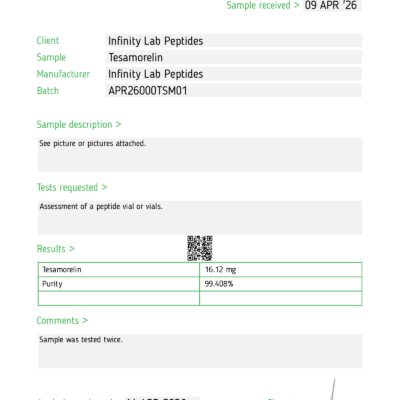
Batch documentation at a glance
Figures below are copied from our COA library as it reads today.
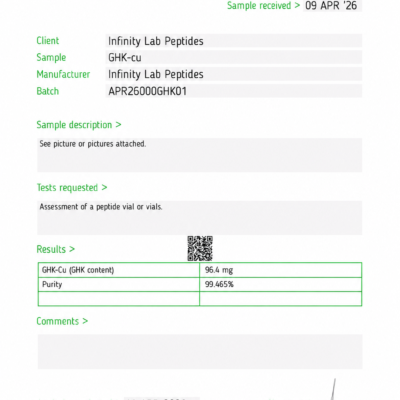
GHK-Cu
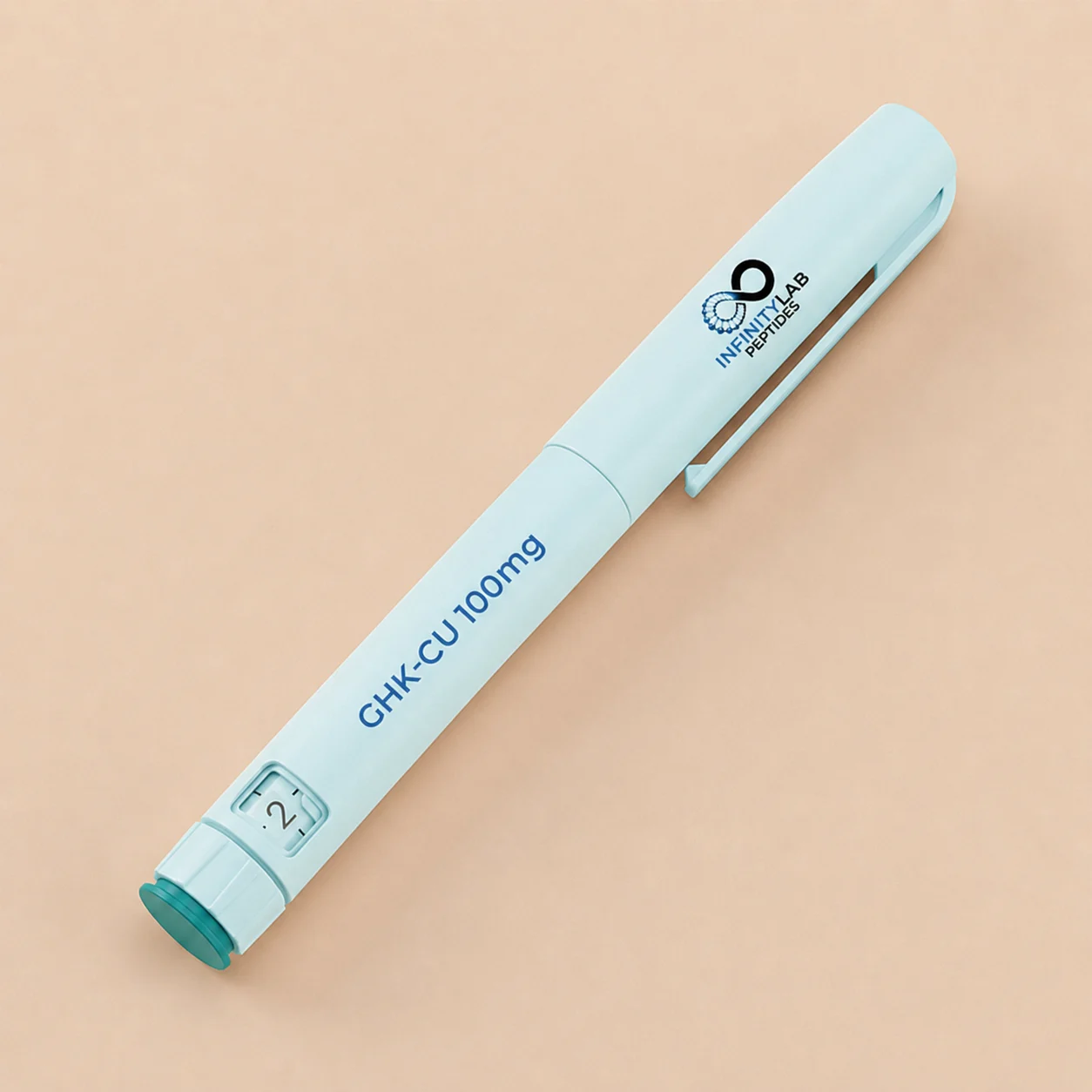
Listings: GHK-Cu 100 mg vial, GHK-Cu 100 mg pen
Purity: 99.465%
Batch: APR26000GHK01
Analysis date: 14 APR 2026
Lab: Janoshik
Verification key: 6154WM73YX5R
The library shows this one report for both the GHK-Cu and GHK-Cu pen entries.
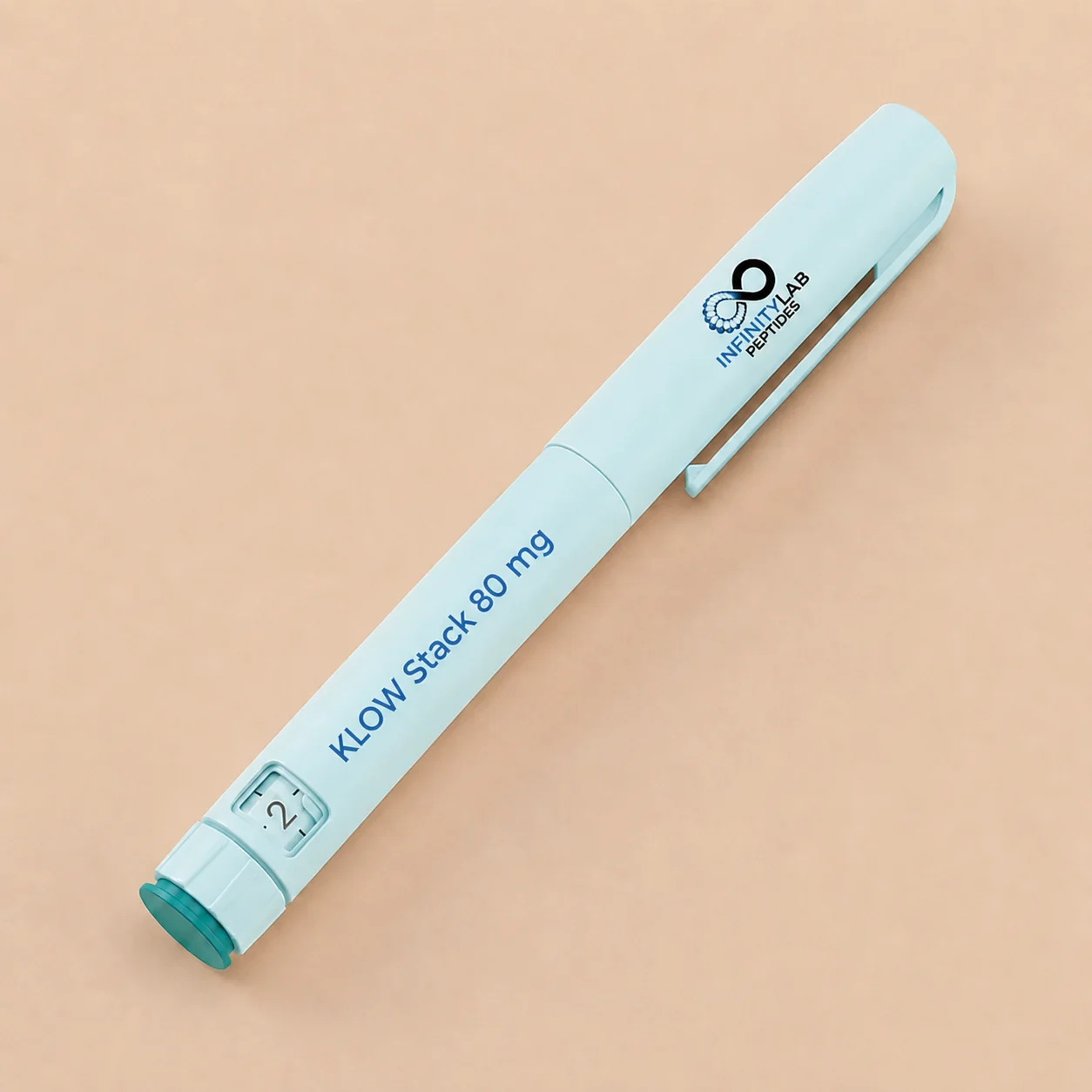
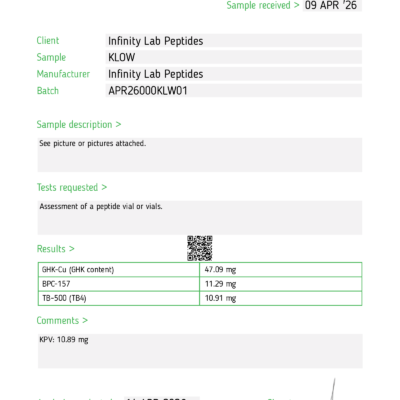
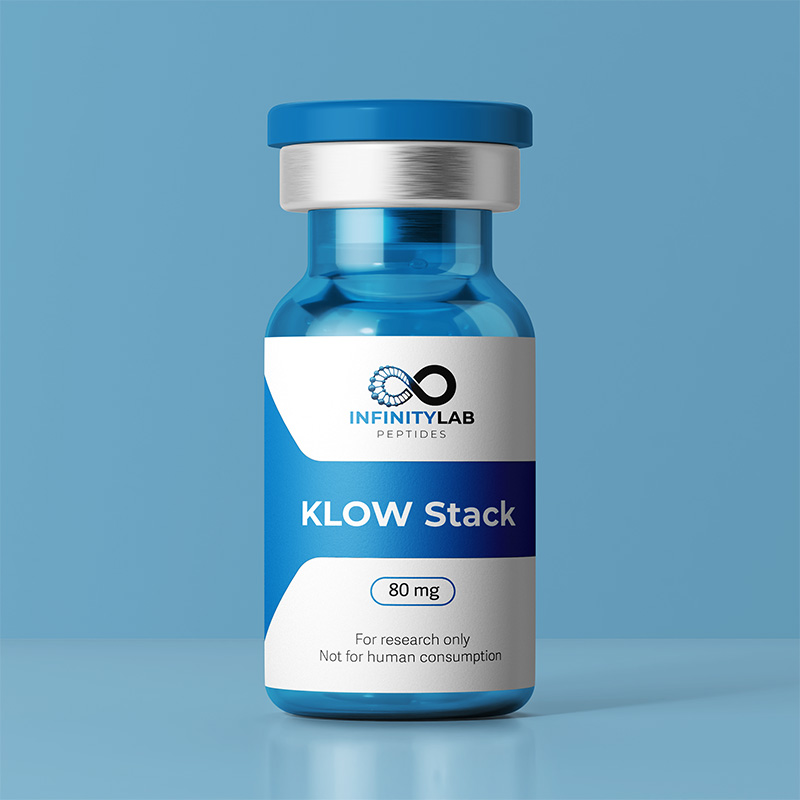
KLOW Stack 80 mg
Listings: KLOW Stack 80 mg vial, KLOW Stack 80 mg pen
Composition (listing): BPC157/TB500/KPV/GHK-CU
Purity: no figure shown on the library card
Batch: APR26000KLW01
Analysis date: 14 APR 2026
Lab: Janoshik
Verification key: 9EXMNFKGIC4M
The card shows no purity percentage, so we do not quote one. The listing does not state the amount of each component.
Use the verification key to open the original Janoshik report. For a blend, the useful questions are whether each of the four peptides was identified, and whether each was quantified on its own.
Identity: one complex versus four molecules
All identifiers below come from PubChem.
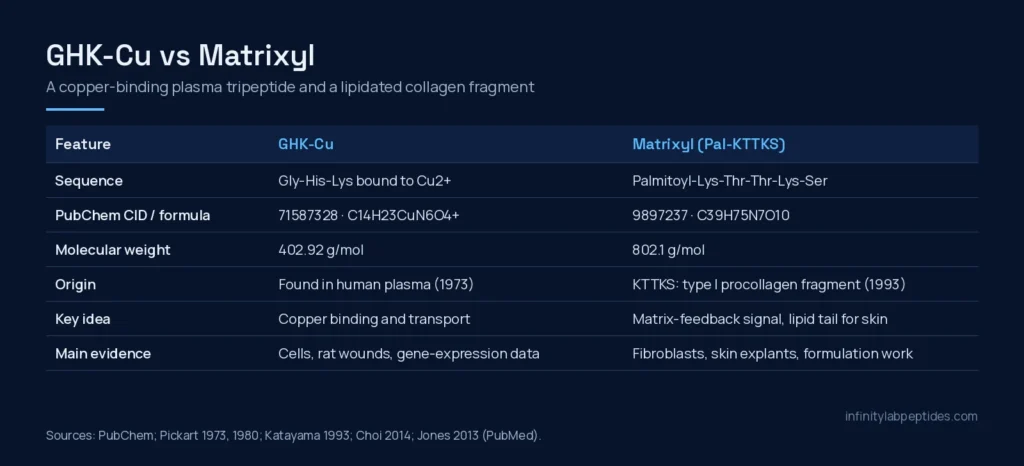
| Component | What it is | Formula | MW (g/mol) | PubChem CID |
|---|---|---|---|---|
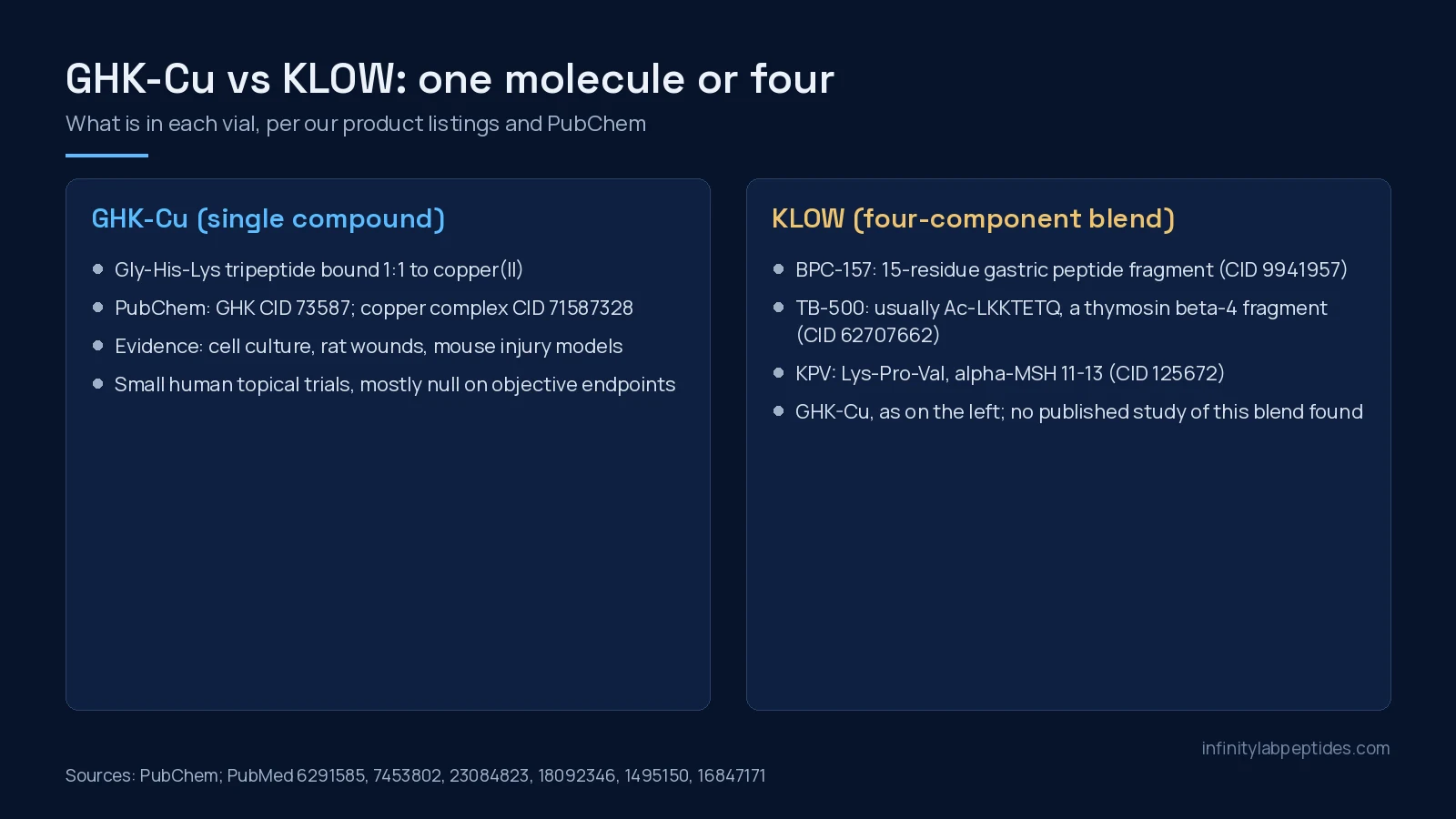
| GHK (free peptide) | Glycyl-L-histidyl-L-lysine; first reported in human serum[7],[8] | C14H24N6O4 | 340.38 | 73587 |
| GHK-Cu (prezatide copper) | 1:1 copper(II) complex of GHK, with histidine nitrogen in the copper site[1] | C14H23CuN6O4+ | 402.92 | 71587328 |
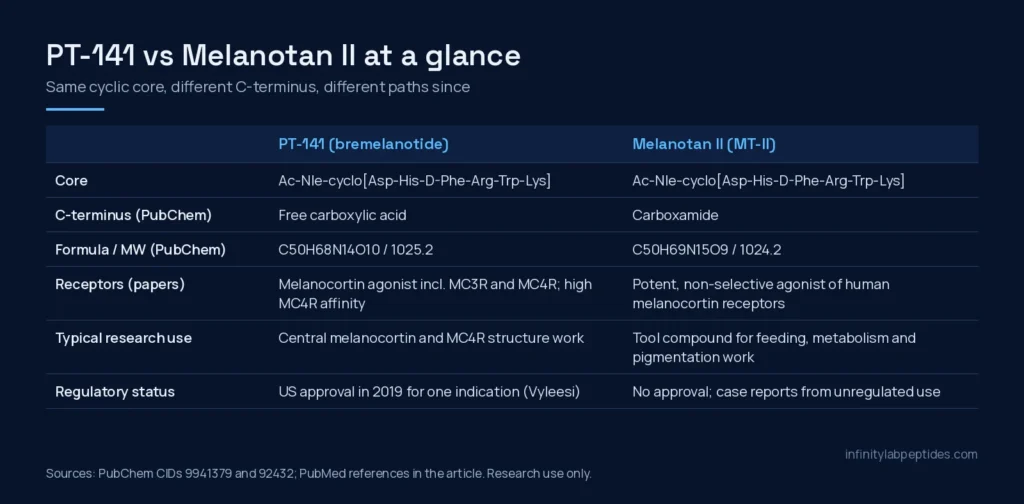
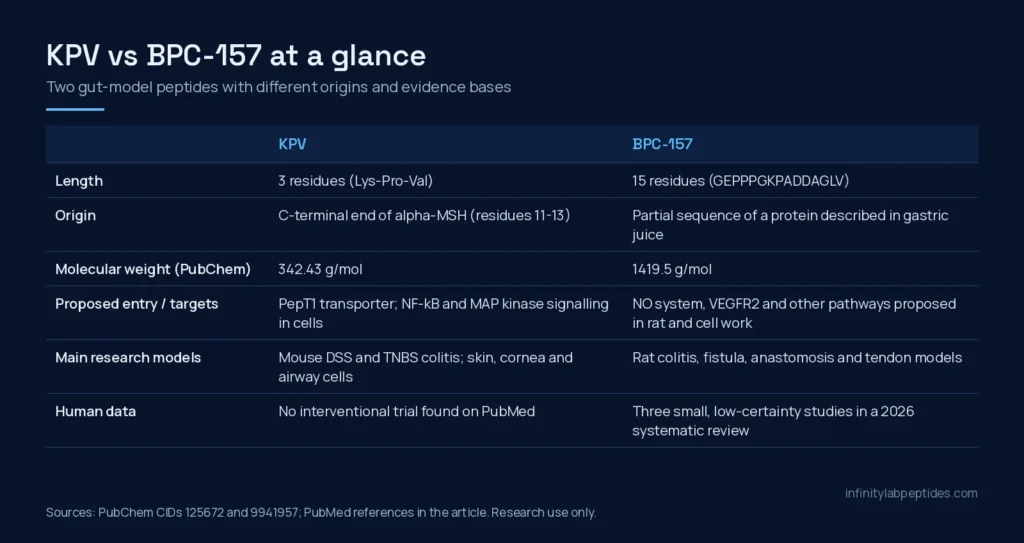
| BPC-157 | 15-residue partial sequence of a protein from human gastric juice[4] | C62H98N16O22 | 1419.5 | 9941957 |
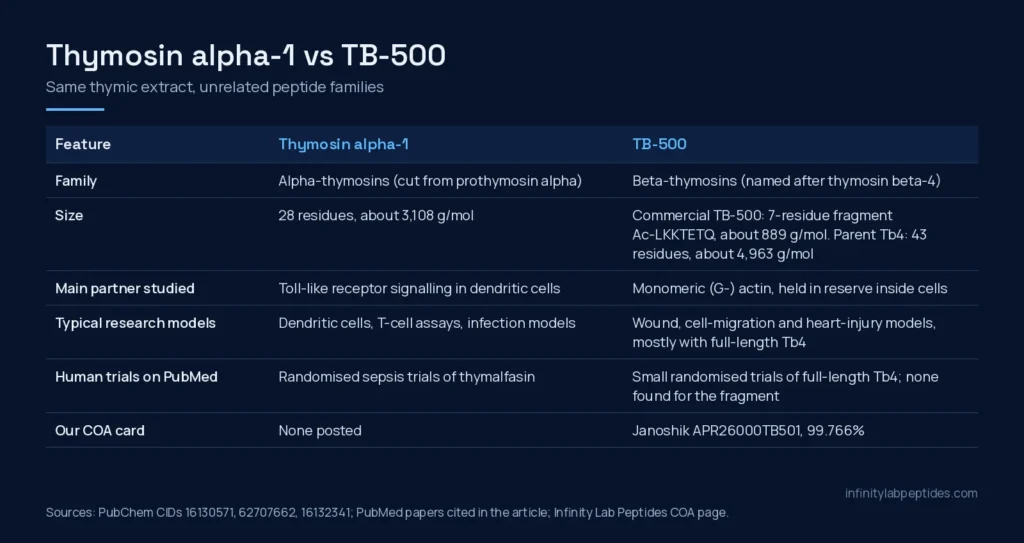
| TB-500 | Commonly the N-acetylated fragment LKKTETQ, residues 17-23 of thymosin beta-4[9] | C38H68N10O14 | 889.0 | 62707662 |
| KPV | Lys-Pro-Val, the C-terminal tripeptide (11-13) of alpha-MSH[3],[10] | C16H30N4O4 | 342.43 | 125672 |
Two naming traps matter here. First, “TB-500” is used in commerce both for the seven-residue fragment and, loosely, for full-length thymosin beta-4 (PubChem CID 16132341, timbetasin, MW 4963); the two are not interchangeable, and a blend report should state which mass it found. Second, “KLOW” is a trade name, not a defined substance: other sellers use similar names for different mixtures, so any outside article about “KLOW” may be describing something else.
GHK-Cu: what the research covers
The GHK story starts with a growth-modulating factor found in human serum in 1973 and identified as glycyl-histidyl-lysine in 1977[7],[8]. In 1980 the same group reported that the tripeptide co-isolated with roughly equimolar copper and that its effects on cultured hepatoma cells were greatest when copper was supplied with it[2]. Spectroscopy later showed that at neutral pH GHK forms a mononuclear 1:1 copper(II) complex, with one copper-binding nitrogen located in the histidine ring[1].
Most of the mechanistic work is in fibroblasts and rat wound models. In fibroblast cultures, GHK-Cu stimulated collagen synthesis starting at picomolar concentrations, independent of any change in cell number[11]. In rats fitted with subcutaneous wound chambers, GHK-Cu increased dry weight, DNA, protein, collagen and glycosaminoglycan content in a concentration-dependent way, while a control tripeptide had no effect[12]. A follow-up in the same model found GHK-Cu did not change interstitial collagenase activity but altered gelatinase expression[13]. Outside the skin, in mice with lipopolysaccharide-induced acute lung injury, GHK-Cu reduced reactive oxygen species and inflammatory cytokine production through NF-kappaB and p38 MAPK signalling[14].
Animal joint work is less clear-cut. In a randomised study of 72 rats after anterior cruciate ligament reconstruction, GHK-Cu reduced knee laxity and increased graft stiffness at 6 weeks, but neither difference remained at 12 weeks, and ultimate load, gait and histology did not differ; the authors concluded the effect did not last once treatment stopped[15].
KLOW’s other three components
KPV
KPV is the C-terminal tripeptide of alpha-melanocyte-stimulating hormone. In two mouse colitis models (DSS and T-cell transfer), KPV-treated mice recovered weight sooner and showed less colonic inflammation, and the effect persisted in mice lacking a functional melanocortin-1 receptor, pointing to a mechanism at least partly independent of that receptor[3]. A second group showed KPV enters intestinal epithelial and immune cells through the PepT1 di/tripeptide transporter and inhibits NF-kappaB and MAP kinase signalling at nanomolar concentrations; given in drinking water, it reduced colitis in DSS and TNBS mouse models[16]. Alpha-MSH peptides including KPV also inhibited Staphylococcus aureus and Candida albicans in vitro[10]. A review of alpha-MSH and related tripeptides places these findings in the broader melanocortin literature[17].
BPC-157
BPC-157 is a 15-residue fragment of a protein isolated from human gastric juice. In rat tendon fibroblasts it promoted explant outgrowth, cell survival under oxidative stress and dose-dependent migration, apparently through the FAK-paxillin pathway, without directly increasing proliferation[4]. Its research group reports it entered trials for inflammatory bowel disease in Croatia[18]; we did not find peer-reviewed results from those trials.
TB-500
Full-length thymosin beta-4 is the main actin-sequestering protein in cells[19]. In a rat full-thickness wound model, topical or intraperitoneal thymosin beta-4 increased re-epithelialisation, collagen deposition and angiogenesis[5]. TB-500 products, however, are typically the acetylated LKKTETQ fragment, identified in equine doping-control work[9], and recombinant full-length thymosin beta-4 data, such as a phase I safety study in healthy volunteers[20], do not automatically describe the fragment.
Single compound vs blend: side-by-side
| Question | GHK-Cu | KLOW (BPC-157 / TB-500 / KPV / GHK-Cu) |
|---|---|---|
| Number of molecules | One complex[1] | Four, plus copper |
| Main research models | Fibroblasts, rat wound chambers, mouse lung injury[11],[12],[14] | Each component studied separately, mainly in rodents[3],[4],[5] |
| Studies of the exact combination | Not applicable | None found; BPC-157 + TB-500 in rats showed no additive effect[6] |
| Human data | Small topical trials, null on objective endpoints[21],[22] | None for the blend; phase I safety data exist for recombinant thymosin beta-4 only[20] |
| Attributing an effect | Straightforward | Requires single-component arms |
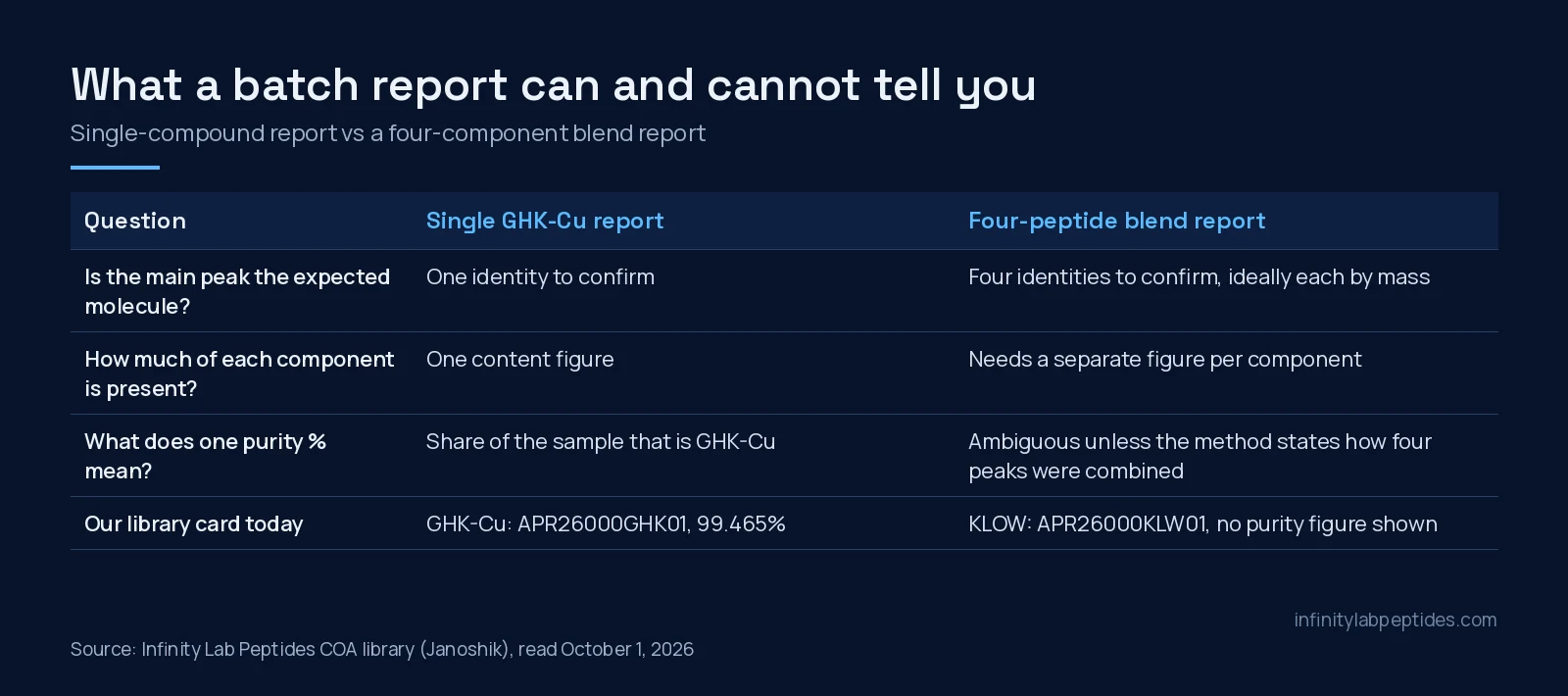
| Our posted COA | APR26000GHK01, 99.465% | APR26000KLW01, no purity figure on the card |
What combining them does to an experiment
The argument for blends is convenience and the idea that different mechanisms might add up. The published evidence for that idea is thin. The only controlled animal study we found that combined two of KLOW’s components treated 32 rats after Achilles tendon repair with BPC-157, TB-500, both, or nothing. TB-500 alone produced a significant biomechanical advantage and better histology scores; the combination did not confer additional benefit over either peptide alone, and the authors suggested the two may converge on shared downstream pathways[6].
Three further practical issues follow from chemistry rather than biology. GHK binds copper(II) through histidine and backbone nitrogens[1], and whether copper stays on GHK in a concentrated four-peptide mixture has not, to our knowledge, been reported. A single purity percentage for a blend can mean different things depending on how the lab handled four peaks, which is one reason our library card for KLOW shows none. And without per-component amounts, a result from a blend cannot be expressed as an exposure to any one molecule.
Null and negative results
- GHK-Cu, venous stasis ulcers: in a prospective, randomised, evaluator-blinded trial with 86 evaluable patients, a tripeptide-copper cream did not differ from inert placebo, while silver sulfadiazine reduced ulcer size[21].
- GHK-Cu, laser-resurfaced skin: in a randomised study of 13 patients, blinded and computer evaluation found no significant difference in erythema resolution, wrinkles or overall skin quality; only patient-reported satisfaction differed[22].
- GHK-Cu, ligament graft in rats: early improvements in laxity and stiffness were gone by 12 weeks, with no difference in ultimate load or histology[15].
- BPC-157 + TB-500, rat tendon: no additional benefit from combining them; BPC-157 alone did not reach significance on total histology scores[6].
What the evidence does not show
- It does not show that KLOW, as a four-component blend, has been studied at all. We found no publication on this combination.
- It does not show that combining peptides adds their effects. The one relevant rat study found no additive effect for BPC-157 with TB-500[6].
- It does not show that GHK-Cu’s cell and rodent findings carry over to people. The two human trials cited here were null on their objective endpoints[21],[22].
- It does not show how KPV behaves outside mouse colitis and cell models[3],[16].
- It does not show that full-length thymosin beta-4 data describe the TB-500 fragment[9],[20].
- It does not show that a purity figure predicts any biological effect. For a blend, a single figure may not even describe each component.
Choosing between them for a protocol
If the question is about copper-peptide biology, GHK-Cu is the cleaner tool: one molecule, a published structure, a defined PubChem identity and a batch report with a purity figure. If the protocol is explicitly about a multi-peptide condition, KLOW puts four compounds in one vial, but plan single-component control arms, ask for per-component identity and content data from the report, and record which TB-500 form was found. Our research peptides overview lists related single compounds, or you can buy research peptides in Canada with each batch report checked first.
Frequently asked questions
What is the difference between GHK-Cu and KLOW?
GHK-Cu is one molecule, the copper(II) complex of the tripeptide glycyl-histidyl-lysine. KLOW is a blend that our listing describes as BPC-157, TB-500, KPV and GHK-Cu in one vial. GHK-Cu can be studied and verified as a single compound; a blend adds three more variables.
Has the KLOW blend been studied as a combination?
We found no published study of the four-component blend. The only controlled study we found that combined two of its parts, BPC-157 and TB-500 in a rat tendon model, reported no additional benefit over either peptide alone.
What does the KLOW COA show?
Our COA library lists KLOW Stack 80 mg (vial and pen) under Janoshik batch APR26000KLW01, analysed 14 APR 2026, verification key 9EXMNFKGIC4M. The library card shows no purity figure, and the listing does not state the amount of each component.
What does the GHK-Cu COA show?
Our COA library shows Janoshik batch APR26000GHK01 for the GHK-Cu and GHK-Cu pen entries, with a purity of 99.465 percent and an analysis date of 14 APR 2026 (verification key 6154WM73YX5R).
Is TB-500 the same as thymosin beta-4?
Not exactly. TB-500 products are usually the acetylated seven-residue fragment LKKTETQ (residues 17-23 of thymosin beta-4, about 889 Da), while full-length thymosin beta-4 is a 43-residue protein of about 4963 Da. Data on one should not be assumed to apply to the other.
Research use only. All products referenced on this page are intended for laboratory research and analytical applications. They are not for human or animal consumption, and nothing here is medical advice, dosing guidance or a treatment recommendation.
References
- Freedman JH, Pickart L, Weinstein B et al. (1982). Structure of the Glycyl-L-histidyl-L-lysine–copper(II) complex in solution. Biochemistry. PMID: 6291585. doi: 10.1021/bi00262a004.
- Pickart L, Freedman JH, Loker WJ et al. (1980). Growth-modulating plasma tripeptide may function by facilitating copper uptake into cells. Nature. PMID: 7453802. doi: 10.1038/288715a0.
- Kannengiesser K, Maaser C, Heidemann J et al. (2008). Melanocortin-derived tripeptide KPV has anti-inflammatory potential in murine models of inflammatory bowel disease. Inflamm Bowel Dis. PMID: 18092346. doi: 10.1002/ibd.20334.
- Chang CH, Tsai WC, Lin MS et al. (2011). The promoting effect of pentadecapeptide BPC 157 on tendon healing involves tendon outgrowth, cell survival, and cell migration. J Appl Physiol (1985). PMID: 21030672. doi: 10.1152/japplphysiol.00945.2010.
- Malinda KM, Sidhu GS, Mani H et al. (1999). Thymosin beta4 accelerates wound healing. J Invest Dermatol. PMID: 10469335. doi: 10.1046/j.1523-1747.1999.00708.x.
- Biçer O, Adanir O, Güleryüz Y et al. (2026). Effects of BPC-157 and TB-500 on Achilles tendon healing in rats: A histopathological and biomechanical study. Jt Dis Relat Surg. PMID: 42542926. doi: 10.52312/jdrs.2026.2951.
- Pickart L, Thaler MM (1973). Tripeptide in human serum which prolongs survival of normal liver cells and stimulates growth in neoplastic liver. Nat New Biol. PMID: 4349963.
- Schlesinger DH, Pickart L, Thaler MM (1977). Growth-modulating serum tripeptide is glycyl-histidyl-lysine. Experientia. PMID: 858356. doi: 10.1007/BF02002806.
- Ho EN, Kwok WH, Lau MY et al. (2012). Doping control analysis of TB-500, a synthetic version of an active region of thymosin β₄, in equine urine and plasma by liquid chromatography-mass spectrometry. J Chromatogr A. PMID: 23084823. doi: 10.1016/j.chroma.2012.09.043.
- Cutuli M, Cristiani S, Lipton JM et al. (2000). Antimicrobial effects of alpha-MSH peptides. J Leukoc Biol. PMID: 10670585. doi: 10.1002/jlb.67.2.233.
- Maquart FX, Pickart L, Laurent M et al. (1988). Stimulation of collagen synthesis in fibroblast cultures by the tripeptide-copper complex glycyl-L-histidyl-L-lysine-Cu2+. FEBS Lett. PMID: 3169264. doi: 10.1016/0014-5793(88)80509-x.
- Maquart FX, Bellon G, Chaqour B et al. (1993). In vivo stimulation of connective tissue accumulation by the tripeptide-copper complex glycyl-L-histidyl-L-lysine-Cu2+ in rat experimental wounds. J Clin Invest. PMID: 8227353. doi: 10.1172/JCI116842.
- Siméon A, Monier F, Emonard H et al. (1999). Expression and activation of matrix metalloproteinases in wounds: modulation by the tripeptide-copper complex glycyl-L-histidyl-L-lysine-Cu2+. J Invest Dermatol. PMID: 10383745. doi: 10.1046/j.1523-1747.1999.00606.x.
- Park JR, Lee H, Kim SI et al. (2016). The tri-peptide GHK-Cu complex ameliorates lipopolysaccharide-induced acute lung injury in mice. Oncotarget. PMID: 27517151. doi: 10.18632/oncotarget.11168.
- Fu SC, Cheuk YC, Chiu WY et al. (2015). Tripeptide-copper complex GHK-Cu (II) transiently improved healing outcome in a rat model of ACL reconstruction. J Orthop Res. PMID: 25731775. doi: 10.1002/jor.22831.
- Dalmasso G, Charrier-Hisamuddin L, Nguyen HT et al. (2008). PepT1-mediated tripeptide KPV uptake reduces intestinal inflammation. Gastroenterology. PMID: 18061177. doi: 10.1053/j.gastro.2007.10.026.
- Brzoska T, Luger TA, Maaser C et al. (2008). Alpha-melanocyte-stimulating hormone and related tripeptides: biochemistry, antiinflammatory and protective effects in vitro and in vivo, and future perspectives for the treatment of immune-mediated inflammatory diseases. Endocr Rev. PMID: 18612139. doi: 10.1210/er.2007-0027.
- Sikiric P, Seiwerth S, Brcic L et al. (2006). Stable gastric pentadecapeptide BPC 157 in trials for inflammatory bowel disease (PL-10, PLD-116, PL 14736, Pliva, Croatia). Full and distended stomach, and vascular response. Inflammopharmacology. PMID: 17186181. doi: 10.1007/s10787-006-1531-7.
- Goldstein AL, Hannappel E, Kleinman HK (2005). Thymosin beta4: actin-sequestering protein moonlights to repair injured tissues. Trends Mol Med. PMID: 16099219. doi: 10.1016/j.molmed.2005.07.004.
- Wang X, Liu L, Qi L et al. (2021). A first-in-human, randomized, double-blind, single- and multiple-dose, phase I study of recombinant human thymosin β4 in healthy Chinese volunteers. J Cell Mol Med. PMID: 34346165. doi: 10.1111/jcmm.16693.
- Bishop JB, Phillips LG, Mustoe TA et al. (1992). A prospective randomized evaluator-blinded trial of two potential wound healing agents for the treatment of venous stasis ulcers. J Vasc Surg. PMID: 1495150. doi: 10.1067/mva.1992.37086.
- Miller TR, Wagner JD, Baack BR et al. (2006). Effects of topical copper tripeptide complex on CO2 laser-resurfaced skin. Arch Facial Plast Surg. PMID: 16847171. doi: 10.1001/archfaci.8.4.252.